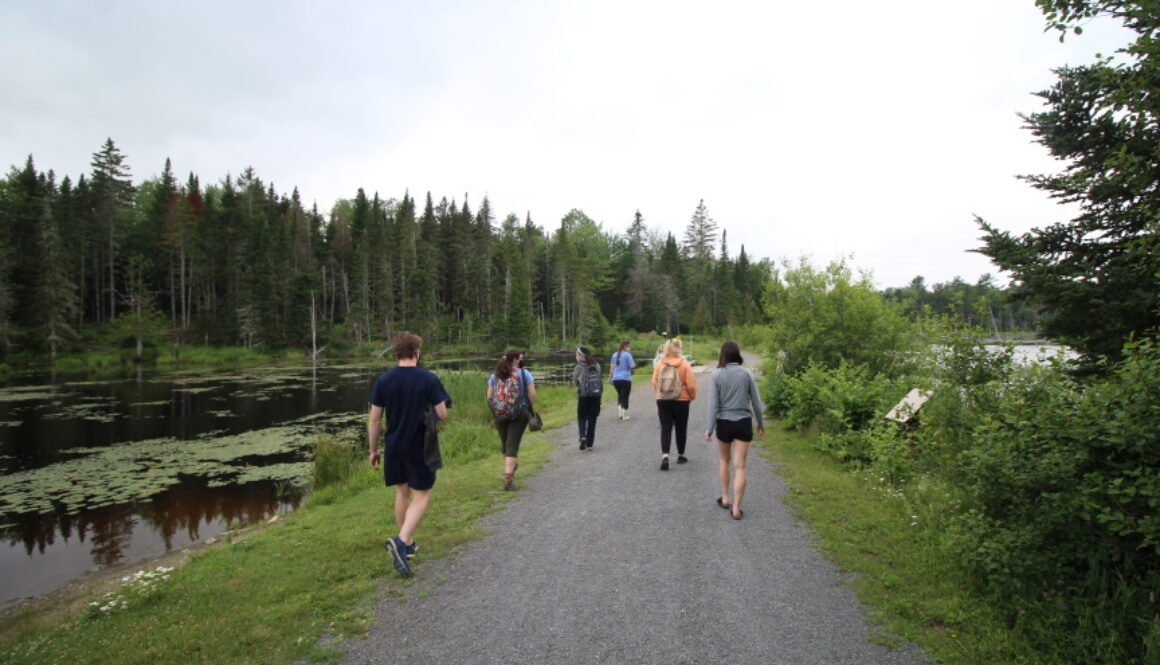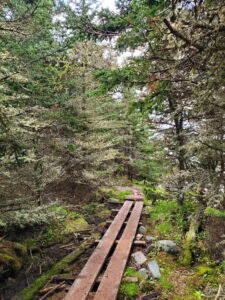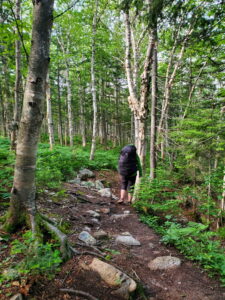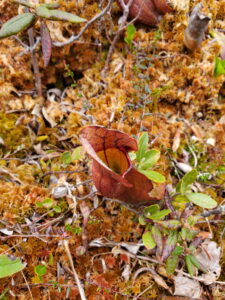



Les principaux groupes environnementaux du N.-B. accueillent favorablement la première étape visant à doubler la protection de la nature au Nouveau-Brunswick
Terre traditionnelle du peuple abénaquis/Fredericton — Une coalition de cinq organisations provinciales de l’environnement et de la conservation – la Société pour la nature et les parcs du Canada, section Nouveau-Brunswick, le Conseil de conservation du Nouveau-Brunswick, Nature NB, la Fondation pour la protection des sites naturels du Nouveau-Brunswick, et la Région de biosphère de Fundy – a émis la déclaration conjointe suivante en réponse à l’annonce faite aujourd’hui par le gouvernement du Nouveau-Brunswick dans le cadre de l’initiative Patrimoine naturel.
 « Nous sommes heureux de voir le gouvernement provincial désigner près de 100 000 hectares de nouvelles aires protégées dans le cadre de son engagement à doubler les terres et les eaux protégées au Nouveau-Brunswick.
L’annonce d’aujourd’hui marque une étape importante pour la conservation dans notre province. D’abord, parce qu’une proportion importante de nos sites naturels est en train d’être protégée pour la nature et contre le développement industriel. Notre environnement naturel et nos communautés sont soumis à un stress croissant, menacés par la double crise du changement climatique et de la perte de nature. Augmenter de façon significative la quantité de nature protégée au Nouveau-Brunswick est une étape critique pour faire face à ces crises.
Deuxièmement, c’est la première fois que le gouvernement inclut les Néo-Brunswickois dans l’identification des sites naturels à conserver.
Nous sommes reconnaissants envers les milliers de Néo-Brunswickois qui ont rendu possible l’annonce d’aujourd’hui en exigeant une meilleure protection de nos forêts, rivières et terres humides. Les citoyens du Nouveau-Brunswick ont proposé la protection d’un grand nombre de ces sites naturels, soutenus par leurs connaissances locales et leur passion.
Mais notre soutien à l’annonce d’aujourd’hui s’accompagne d’une mise en garde importante. Une occasion cruciale a été manquée de faire progresser la réconciliation avec les communautés autochtones par le biais du programme Patrimoine naturel.
Les peuples Wolastoqiyik, Mi’gmaq et Peskotomuhkati sont les intendants et les gardiens du savoir traditionnel de cette terre depuis des temps immémoriaux. Un accord solide sur la réconciliation et la collaboration nous mettrait sur la voie des futures actions de conservation. Nous nous engageons à faire notre part pour agir en tant que peuples visés par un traité et à créer une nouvelle ère de respect, d’équité, de coopération et de cogestion de nation à nation pour les terres non cédées.
Nous attendons avec espoir la prochaine étape de la protection de la nature, alors que la province s’apprête à tenir sa promesse de protéger 300 000 hectares supplémentaires de terres cette année. Cette prochaine étape doit réparer et tisser des partenariats avec les nations autochtones. C’est l’occasion pour notre génération de créer un héritage durable pour la nature, en collaborant dans la paix et l’amitié.
CITATIONS
« C’est un grand pas dans la bonne direction que les nouvelles aires protégées comprennent d’importantes forêts sauvages dans le cours supérieur de la Gaspereau, des habitats de forêts agées dans la Restigouche et des sites naturels qui relient Kouchibouguac, Fundy et le mont Carleton. La SNAP NB encourage les gouvernements à revitaliser les relations avec les peuples autochtones, ce qui mènera à une cogestion de nos responsabilités envers la nature. »
—Roberta Clowater, Directrice exécutive, Société pour la nature et les parcs du Canada – Section N.-B.
« Les Néo-Brunswickois aiment leurs forêts, leurs rivières et leurs terres humides et ils sont unis pour demander au gouvernement et à l’industrie de mieux s’occuper de ces espaces importants. Aujourd’hui, je me joins aux milliers de citoyens qui célèbrent cette annonce qui nous rapproche d’une gestion forestière plus intelligente et écologique au Nouveau-Brunswick.»
—Lois Corbett, Directrice exécutive, Conseil de conservation du Nouveau-Brunswick
« Les Néo-Brunswickois ont toujours été une voix forte pour la nature du Nouveau-Brunswick. Ce sentiment collectif d’appartenance et de responsabilité a joué un rôle important dans la responsabilisation du gouvernement du Nouveau-Brunswick quant à son engagement à accroître les aires protégées. Ces premiers 100 000 ne sont qu’un début et les passionnés de la nature de toute la province continueront à exiger que la conservation de la nature par la réconciliation soit une priorité à l’avenir. »
—Vanessa Roy-McDougall, Directrice générale, Nature NB
« Lorsque les Néo-Brunswickois défendent la nature, de bonnes choses se produisent. La conservation de ces précieux espaces naturels est essentielle à la survie de nos oiseaux, de la faune forestière et des fleurs sauvages en voie de disparition. Ils aident également à protéger les collectivités contre les changements climatiques et offrent des loisirs et du réconfort à tous ceux qui les visitent. »
—Stephanie Merrill, Directrice générale, Fondation pour la protection des sites naturels du Nouveau-Brunswick
« Le Nouveau-Brunswick abrite certains des paysages les plus uniques du Canada qui soutiennent une incroyable diversité de vie. En tant que Néo-Brunswickois, nous pouvons être fiers de l’expansion du réseau de zones protégées annoncée aujourd’hui, tout en faisant appel à d’autres mesures – un dialogue et une collaboration plus significatifs avec les peuples autochtones, davantage de corridors de conservation pour les grands mammifères et davantage de solutions industrielles axées sur la nature. »
—Jennifer Dingman, Directrice exécutive, Région de biosphère de Fundy de l’UNESCO
-30-
Pour organiser une entrevue, contactez:
Roberta Clowater, Société pour la nature et les parcs du Canada – Section N.-B.:
rclowater@cpaws.org; (506) 452-9902
Lois Corbett, Conseil de conservation du Nouveau-Brunswick:
lois.corbett@conservationcouncil.ca; (506) 458-8747
Vanessa Roy-McDougall, Nature NB:
executive.director@naturenb.ca; (506) 449-9197
Stephanie Merrill, Fondation pour la protection des sites naturels du Nouveau-Brunswick:
stephanie.merrill@ntnb.org; (506) 457-2398
Pour obtenir des informations sur les sites spécifiques des aires protégées ou sur les animaux et les plantes qui bénéficieront de l’annonce d’aujourd’hui, contactez:
Roberta Clowater, Société pour la nature et les parcs du Canada – Section N.-B.:
rclowater@cpaws.org; (506) 452-9902
Jon MacNeil, Conseil de conservation du Nouveau-Brunswick:
jon.macneil@conservationcouncil.ca; (506) 458-8747
Vanessa Roy-McDougall, Nature NB:
executive.director@naturenb.ca; (506) 459-4209
Stephanie Merrill, Fondation pour la protection des sites naturels du Nouveau-Brunswick:
stephanie.merrill@ntnb.org; (506) 457-2398