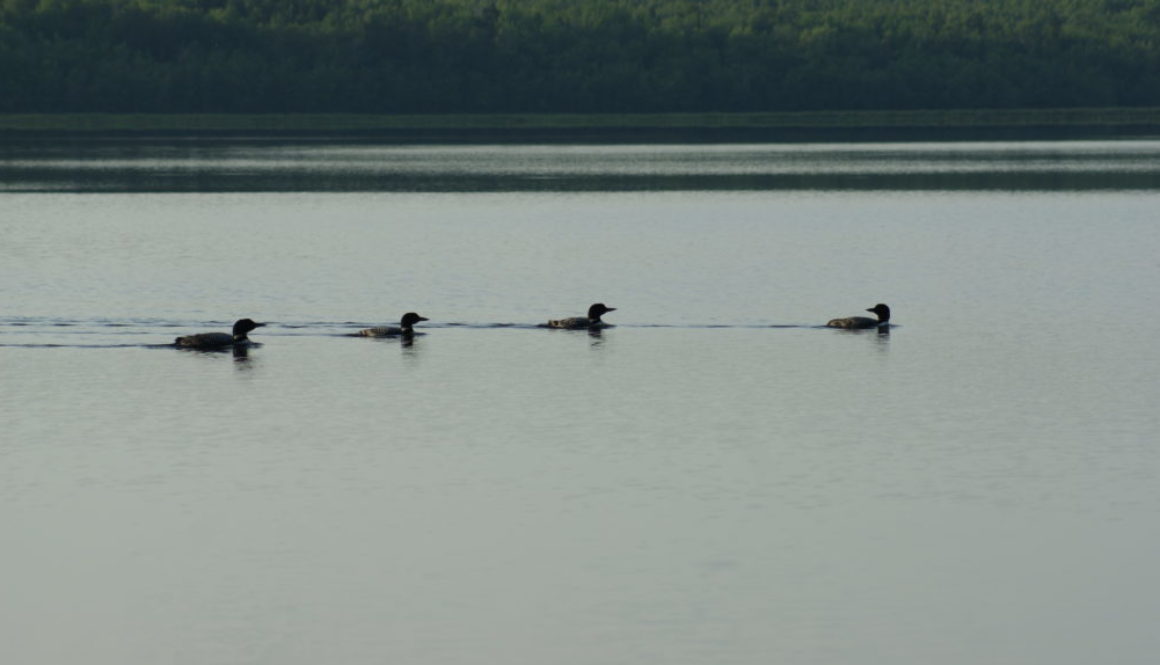
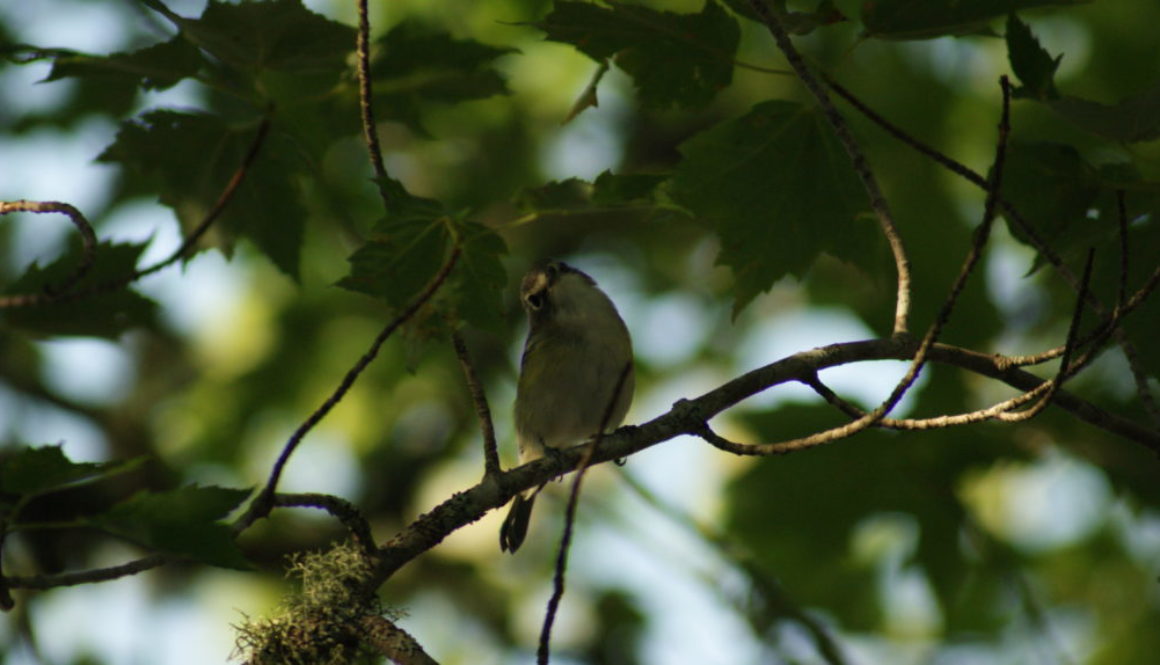
From microscopic organisms to seed-hoarding birds to the tallest trees, an ecosystem is a collection of individual plants and animals in careful balance. Just like in your workplace, circle of friends, or each organism has an important role to play. Some examples include:
The garbage collector – the person in your life who will lick everyone’s plate and never lets food go to waste. In an ecosystem, this might be fungi or decomposing bacteria. These species work to breakdown decaying organisms and recycle their nutrients back into the ecosystem.
Photo by Steve ReidThe one who always has food – possibly the mom of the group. Alternatively, “primary producers” in an ecosystem, which are all of the organisms (such as plants) that can make their own food, usually through photosynthesis. The primary producers are essential to the food chain, creating the baseline energy that all other organisms rely on.
The one who holds you all together – your boss, your family’s matriarch, or your most organized friend. In ecosystems, some species have the important job of physically holding the ecosystem together. For example, the roots of trees or underground stems of grasses help to hold soils in place.
The engineer – some species are exceptionally good builders, like your friend who could make anything from popsicle sticks and a roll of tape. Consider beavers: when beavers dam a waterway, they are changing the way that ecosystem works. These species build, change, and maintain habitats in the ecosystem.
The control freak – someone who has more control than others over how the rest of the group acts. In an ecosystem, this could be a “keystone species”, often predators who control populations of prey. Without these species, ecosystems tend to look and work entirely different.
Organisms aren’t just grouped by the typical food chain – producers, consumers, predators, decomposers – they can also be grouped based on shared behaviours and their roles in creating a healthy ecosystem. In ecosystem conservation, the goal is to protect as many organisms in each role as possible. Instead of protecting just species that are threatened or endangered, we need to protect a collection of species whose behaviours support the health of others. Instead of protecting only one species in each role, we need to protect multiple species to create some redundancy and resilience to unexpected change, like wildfire or floods.
Photo by Julie Reimer
Protected areas designed to include multiple species within each role are well-equipped to preserve a healthy functioning ecosystem into the future. When protected areas are large enough and well-managed to reduce threats from industry and development, they can ensure that biodiversity is in balance.
CPAWS-NB sees protected areas on land and at sea as the best opportunity to conserve and restore ecosystems. Currently, New Brunswick lags behind other Canadian provinces in creating protected areas, but in the Pathway to Canada Target 1, New Brunswick has an opportunity to contribute to Canada’s goals of protecting 17% of land and freshwater by 2020. CPAWS-NB is eager to work together with Indigenous, federal, provincial, and municipal governments in creating protected areas that secure our habitats for the benefit of all New Brunswickers.
Julie Reimer is a PhD student at the Memorial University of Newfoundland and a Board Member of CPAWS-NB. Having worked in the whale watching industry in New Brunswick and conducted her Master’s research on conservation planning for the North Atlantic right whale, Julie is an advocate for MPAs in New Brunswick. Julie’s current research attempts to see the “bigger picture” of conservation, reaching beyond protected areas to understand the synergies between conservation actions and ocean industries. To connect with Julie, visit http://juliereimer.wixsite.com/hello.
The nature of New Brunswick is nothing short of astounding—with coasts on three sides, expansive winding rivers, and more than 200 lakes, this province is home to all kinds of ecosystems, habitats, and landscapes. But what most people think of when it comes to New Brunswick’s backdrop are the trees. When people visit for the first time they are struck by the lush green mixed forests that dominate the landscape, making day trips more scenic and wildlife so abundant.
The forests of New Brunswick build deep roots for culture, biodiversity, and the economy. They provide all kinds of important services to New Brunswickers: storing carbon and helping to reduce impacts from climate change; helping to cycle the nutrients that all life depends on; preventing flooding by holding water in their soils, and creating a sense of ease, happiness, and spirituality for the masses. Two of New Brunswick’s major industries, tourism and forestry, depend on our vibrant and resilient forest. It is without doubt that forests are among the most important resources in New Brunswick, and therefore should be managed with the utmost care.
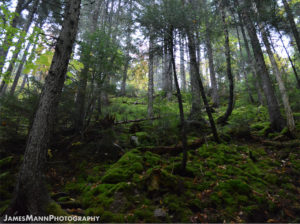
Fundy Park Forests, Photo by James Mann, Creative Commons License 2.0
Forests and forestry products are a renewable resource, which means that with proper management and a keen eye for sustainable use the industry can persist. Unfortunately, this seems to be easier said than done. All over the world in all sorts of industries, renewable resources are being depleted faster than they can recover and reproduce. We have not yet come to terms with the role of climate change in the management of forests. This can lead to unsustainable management that creates risk for industries and for the families, communities, and economies depending on their success.
When it comes to forests, sustainable management ensures that the industry can prevail, while also safeguarding forest ecosystems for the many other benefits they provide. CPAWS-NB looks to the important link between conservation and sustainable industry when it comes to the forests. When forests are protected from industrial development and extraction, they become more resilient and safeguarded against the unknown. Protected forests will continue to deliver the non-forestry benefits that are lost when trees are harvested, ensuring a productive forest ecosystem now and in the future.
Winter at Irishtown Reservoir, Photo by James Mann, Creative Commons License 2.0
This summer, the New Brunswick Department of Energy and Resource Development released a revised Forest Strategy that will, among other management strategies, allow the province to re-build commitments to conservation. The revised Strategy might open the door for increasing protected area coverage, which is currently only 4.6% of the province. CPAWS-NB is optimistic that this Strategy is a good start to building a foundation for conservation and hopes that the province will go further to make forest integrity and resilience an urgent priority in forestry management.
As put by the CPAWS-NB Executive Director, Roberta Clowater, “a modern Forest Strategy needs to have a serious insurance policy of significant areas where nature is permanently protected from industrial development.” Listen to an interview with Roberta on the Strategy and forest conservation in the province here.
As the provincial election approaches, consider New Brunswick’s forests before you cast your ballot. Remember that, as a province, we need to be working together to create a healthy industry rooted in a healthy forest, and this will mean a serious investment in protected areas.
Julie Reimer is a PhD student at the Memorial University of Newfoundland and a Board Member of CPAWS-NB. Having worked in the whale watching industry in New Brunswick and conducted her Master’s research on conservation planning for the North Atlantic right whale, Julie is an advocate for MPAs in New Brunswick. Julie’s current research attempts to see the “bigger picture” of conservation, reaching beyond protected areas to understand the synergies between conservation actions and ocean industries. To connect with Julie, visit http://juliereimer.wixsite.com/hello.
Fredericton – Following New Brunswick’s first ever election forum on nature conservation, held yesterday by the Canadian Parks and Wilderness Society (CPAWS), the group is delivering a list of 5,000 people to Premier Graham today who support keeping the province’s most spectacular wilderness, the Restigouche, forever wild.
The Green Party, the New Democratic Party and the Liberal Party sent representatives to participate in the forum. The NDP representative, Genevieve MacRae, stated that the NDP wants a comprehensive plan that will achieve long-term diverse and sustainable jobs and a healthy forest environment, and was supportive of an increase in protected areas. The Liberal Party representative, Greg Byrne, stated that the Liberals believe the decision they announced previously, with a small increase in protected areas and an increased focus on plantations, is a balanced approach they are committed to following. The Green Party representative, Jean-Louis Deveau, said that they would support increasing the target for establishing new protected areas so that the wildest parts of the Restigouche could be legally protected, in conjunction with more ecosystem based management of public forests. Much to the disappointment of the 60 people in the audience, they were not able to hear from the Progressive Conservative or People’s Alliance parties.
“We were disappointed that despite repeated efforts to confirm representation from the Progressive Conservative and People’s Alliance parties, they chose not to take this opportunity to speak directly with citizens who care about nature conservation. We very much appreciate the Liberal, NDP and Green parties’ participation in this very interesting evening,” says Roberta Clowater, Executive Director of CPAWS New Brunswick Chapter.
Clowater adds, “Our Keep the Restigouche Wild campaign has so far gained support from over 5000 people online and through postcards. These are people from New Brunswick, Quebec and all over Canada who understand the value of Restigouche wilderness to our province’s ecological health, the survival of wild Atlantic salmon and Canada lynx, and hundreds of sustainable nature-based tourism jobs. New Brunswickers and tourists alike understand this is a valuable natural asset that needs to be protected. We hope that all parties realize its importance to the competitiveness of both our tourism and forestry industries. They are both competing in a marketplace where top level environmental sustainability is now expected by consumers.”
The CPAWS New Brunswick and CPAWS Quebec chapters are working together to encourage the two provinces to protect the wildest parts of this cross-provincial watershed. “The Restigouche is home to rich and varied wildlife such as salmon, bear, lynx and eagles – a wilderness respite for local people and visitors. The enthusiasm for signing our petition shows how much the public wants to preserve its wilderness,” said Sophie Paradis, co- Executive Director of CPAWS Quebec.
CPAWS New Brunswick plans to continue pressing for more protection in the Restigouche with the provincial government, once the election is over.