
Une coalition composée de cinq organisations provinciales environnementales et de conservation : la Société pour la nature et les parcs du Canada – Section Nouveau-Brunswick, le Conseil de la conservation du Nouveau-Brunswick, Conservation de la nature Canada – Région de l’Atlantique, Nature NB et la Fondation pour la protection des sites naturels du Nouveau-Brunswick ont fait un communiqué conjoint pour saluer le récent engagement du gouvernement du Nouveau-Brunswick à protéger 10 % de la surface totale des terres émergées du Nouveau-Brunswick d’ici 2020.
« Nous sommes heureux d’entendre l’annonce du gouvernement provincial qui s’engage à conserver 10 % de la surface totale des terres émergées du Nouveau-Brunswick d’ici 2020. Le Nouveau-Brunswick est réputé pour ses espèces sauvages et son patrimoine naturel remarquables. Cette annonce permettra aux futurs citoyens du Nouveau-Brunswick de découvrir la nature à l’état sauvage, d’observer la flore et la faune dans leur habitat naturel. Ces espaces naturels demeureront intacts pour pouvoir résister aux impacts climatiques.
Étant donné que le changement climatique est à l’origine de conditions météorologiques plus extrêmes et imprévisibles, il est d’autant plus important de protéger les aires naturelles afin qu’elles jouent le rôle de défenses naturelles face aux répercussions des tempêtes, des inondations et des sécheresses. Cet engagement de conservation d’habitats importants qui dispersent et absorbent les eaux de crue, stabilisent le sol et la neige, et réduisent l’impact des ondes de tempête constitue une étape très importante pour la province en termes d’adaptation aux changements climatiques.
À l’échelle mondiale, plus d’un million d’espèces sont en péril en raison de la perte de biodiversité. En conservant plus d’habitats et d’écosystèmes dynamiques, nous contribuons non seulement à la protection des plantes, des animaux et de la biodiversité du Nouveau-Brunswick, mais également à celle des espèces en péril, notamment les espèces migratoires, qui dépendent de l’habitat offert par le Nouveau-Brunswick pour survivre.
Actuellement, le Nouveau-Brunswick est en avant-dernière position en termes de pourcentage (4,6 %) de surface totale d’aires protégées par rapport au reste du Canada. Des milliers de Néo-Brunswickois de toute la province ont envoyé des lettres et ont signé des pétitions pour soutenir la protection accrue des espaces naturels du Nouveau-Brunswick et pour encourager notre province à contribuer activement à l’objectif national de 17 % de protection des terres et des eaux douces du Canada d’ici 2020. Le gouvernement a écouté les Néo-Brunswickois à propos de cet enjeu essentiel.
Toutes les organisations se sont engagées à travailler avec les communautés autochtones de toute la province sur les enjeux de réconciliation et environnementaux tels que la conservation des terres et des espèces sauvages, les espèces en péril et le changement climatique. »
Personnes-ressources :
Roberta Clowater, Société pour la nature et les parcs du Canada – Section Nouveau-Brunswick; courriel : rclowater@cpaws.org; téléphone : (506) 452-9902.
Renata Woodward, Fondation pour la protection des sites naturels du Nouveau-Brunswick; courriel : renata.woodward@ntnb.org; téléphone : (506) 261-1260.
A coalition of five provincial environmental and conservation organizations: the Canadian Parks and Wilderness Society – New Brunswick Chapter, the Conservation Council of New Brunswick, Nature Conservancy of Canada – Atlantic, Nature NB, and the Nature Trust of New Brunswick, have issued a joint statement in support of the Government of New Brunswick’s recent commitment to protecting 10% of New Brunswick’s total land mass by 2020.
“We are pleased to hear the provincial government’s announcement to commit to conserving 10% of New Brunswick’s total land mass by 2020. New Brunswick is known for its remarkable wildlife and natural heritage. This announcement ensures that future citizens of New Brunswick will have the opportunity to discover wild nature, to see flora and fauna in their natural settings, and it ensures that these natural spaces will remain intact so they can weather the storms of climatic impacts.
As the changing climate causes more extreme and unpredictable weather, it is even more important to protect natural areas, so that they can act as natural defenses against the impacts of storms, floods and droughts. This commitment to conserving significant habitats that disperse and absorb floodwaters, stabilize soil and snow, and reduce the impact of storm surges is a considerable step forward for the province in terms of climate change adaptation.
Globally, more than one million species are at risk due to loss of biodiversity. By conserving more habitat and functioning ecosystems, we are helping to not only protect the plants, animals, and biodiversity of New Brunswick, but also species at risk, including migratory species, that rely on New Brunswick habitat for their survival.
Currently, New Brunswick has the second lowest percentage (4.6%) of total protected land compared to the rest of Canada. Thousands of New Brunswickers from throughout the province sent letters and signed petitions to support increasing the protection of New Brunswick’s natural spaces and to encourage our province to actively contribute to the national goal of 17% of Canada’s land and freshwater protected by 2020. The government has listened to New Brunswickers on this critical issue.
All our organizations are committed to working with Indigenous communities throughout the province on reconciliation and environmental issues such as land and wildlife conservation, species at risk, and climate change.”
Contacts:
Roberta Clowater, Canadian Parks and Wilderness Society – NB Chapter: email rclowater@cpaws.org; phone (506) 452-9902
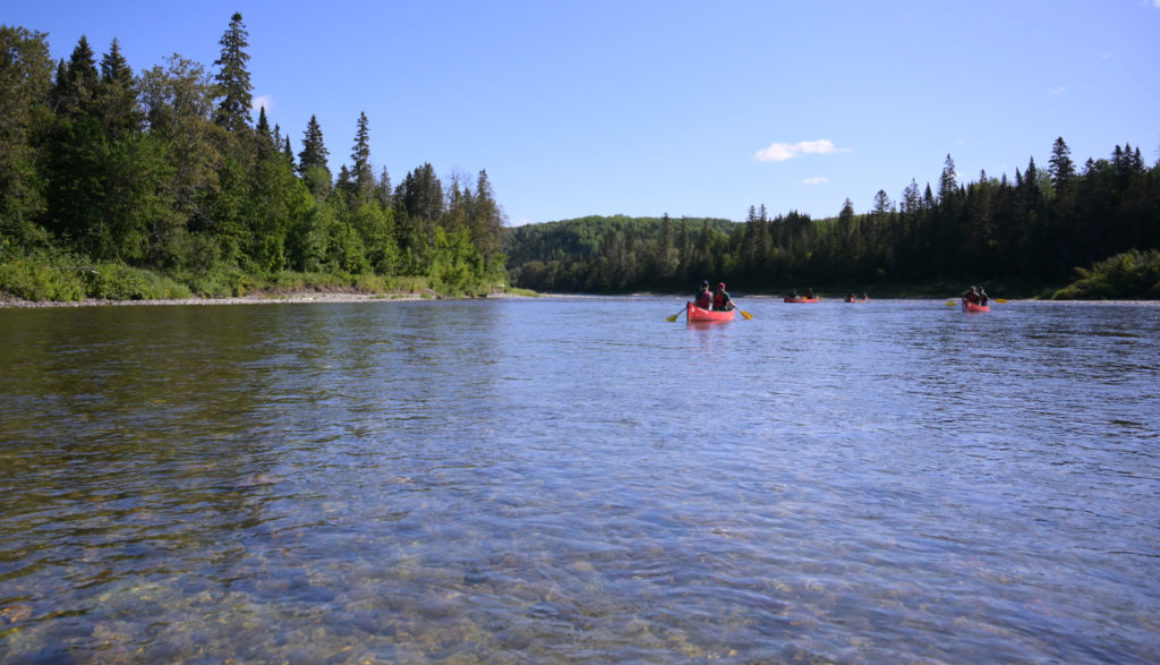
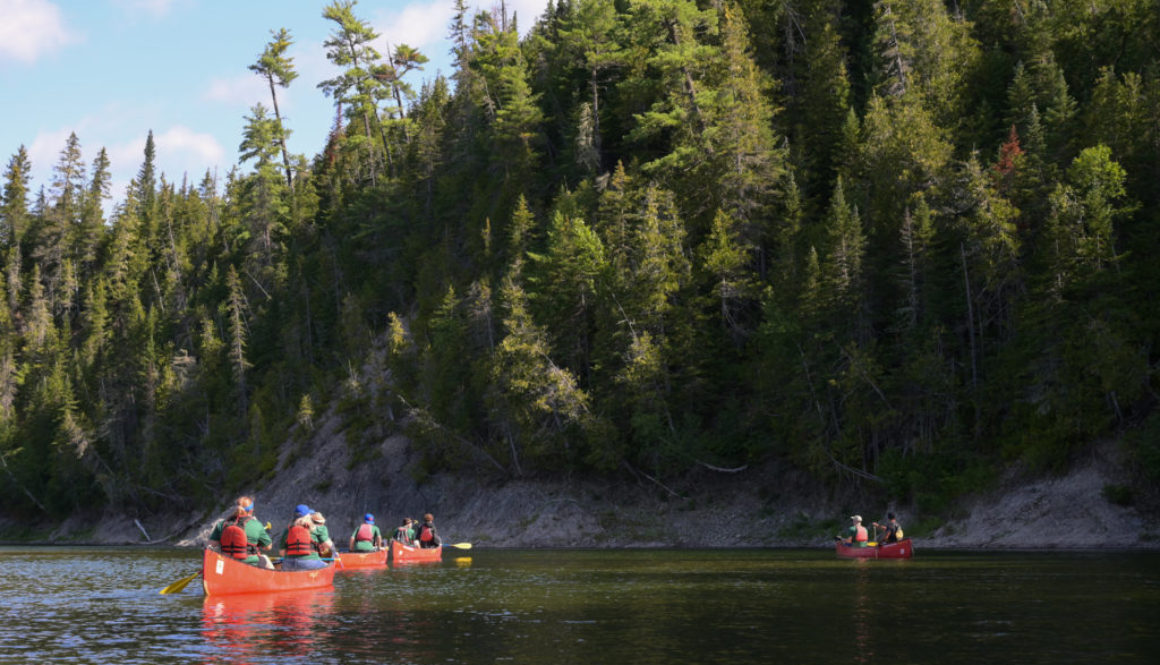
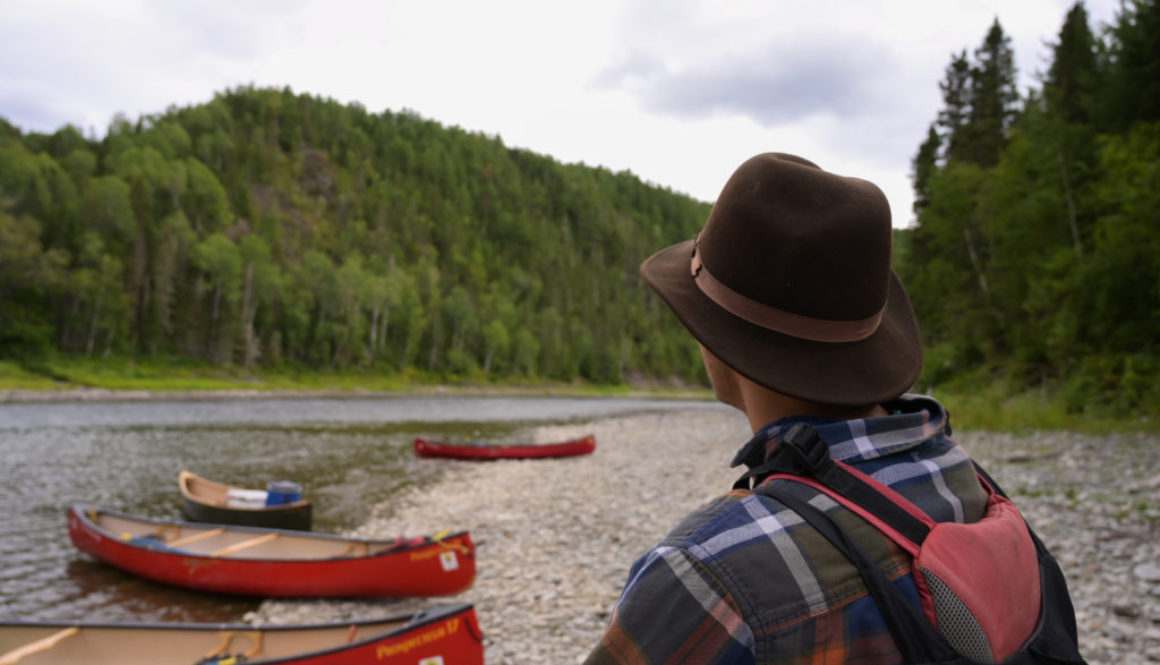
A smooth stroke through calm water. The shimmering silver of a fish below the surface. The deep and quiet green of the forested shoreline. The sense that this place holds so much to explore. The Restigouche River is one of eastern Canada’s most spectacular, most inspiring wild watersheds, one for all New Brunswickers to enjoy.
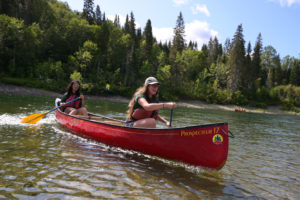
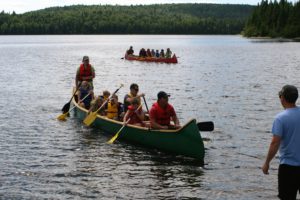
This summer, CPAWS-NB greeted volunteers for our Canadian Wilderness Stewardship Program with a two-day excursion into the Restigouche, and it was an experience we won’t soon forget! By why have us tell you about it when we can hear from the wonderful folks who joined us on the river? We asked Ross Kinney and Gracyn McLaughlin, two of our volunteers and stewards, to share their stories and insights.
For Ross, his time on the Restigouche River was most memorable. “It is one thing to hear about a place or see pictures, but to actually be in the midst of the rolling hills and winding riverbed and variety of trees is an impressive scene.” The Restigouche is a Canadian Heritage River, flowing across northwestern New Brunswick and Quebec’s Gaspé, through 1 million hectares of valleys, hills, and streams. For Gracyn, “experiencing the Restigouche made me feel inspired to promote and pursue conservation in New Brunswick” – a sentiment we share at CPAWS-NB!
For many, the Restigouche is only the beginning. New Brunswick has so much to offer in wilderness, so much to explore and protect. After his experience, Ross would like to see more of the Restigouche and to explore more of the province’s natural wonders. As Ross puts it, “we are fortunate to have such splendours in our backyard, and we have a responsibility to be mindful stewards and caretakers of what we’ve been given. NB alone has so many valuable and meaningful areas worthy of conservation.”
The Restigouche still needs protection that will preserve wilderness while supporting local ecotourism. Gracyn’s experience on the Restigouche opened her eyes to the importance of ecotourism in New Brunswick: “not only does it let people explore and visit areas they might not know about, but it also supports many locals who have a passion for the outdoors and want to get more people outside.” Ross shared a similar sentiment, saying that “being exposed to the natural world forces us to question our exploitation and abuse of it. Ecotourism can build momentum and awareness for the conservation movement, in addition to exposing generations to the wonders of the outdoors.”
Through the Canadian Wilderness Stewardship Program, both Gracyn and Ross will be working with CPAWS NB to build conservation projects in their own communities. We are excited to see how they will use their passion for conservation and their experience on the Restigouche to engage with others. Ross is looking forward to getting folks outside; “by engaging, exploring, and experiencing the wilderness, I hope people will be affected and choose to think more critically about our role in and responsibility for the natural world.”
The power of nature on the soul is something special—something Grace experienced as this experience awakened a passion for the outdoors. “So many people are not aware of the beauty they can see when they leave the house for just a few hours. I believe this experience will really make me want to promote the importance of protecting wildlife in New Brunswick and get people excited about being outside in such a technology driven society.”
Our hope at CPAWS-NB is that all New Brunswickers can enjoy a nature experience, whether on the Restigouche or closer to home. We can’t wait to watch these two volunteers connect with their communities and spread the conservation movement across the province. To learn more about the volunteers of the Canadian Wilderness Stewardship Program, look for future editions of our blog at www.cpawsnb.org.
Author Bio: Brittany Dixon is the Conservation Engagement Coordinator with CPAWS-NB. Through her work with CPAWS, Brittany enjoys the opportunity to combine her love of outdoor exploration with a passion for nature conservation. It is her hope to share this passion with others to demonstrate the value and importance of protecting New Brunswick’s natural areas.
Canadian Parks and Wilderness Society – NB Chapter Chosen as 2019 The North Face Canada Explore Fund Grant Recipient
The Explore Fund Empowers Future Explorers by Removing Barriers to Getting Outside
Today, we’re excited to announce that Canadian Parks and Wilderness Society – NB Chapter (CPAWS NB) has been chosen as a 2019 The North Face Canada Explore Fund grant recipient!
With the support of The North Face Canada, CPAWS NB has been able to recruit and guide ten youth volunteers of the Canadian Wilderness Stewardship Program through a wilderness trip and canoe expedition on the Restigouche River. Participants have been chosen from various NB communities and backgrounds and are gaining an appreciation and connection to the wilderness around them as they return home to create conservation projects in their own communities. Through these service projects and outreach activities, we expect our volunteers to reach and engage with 1000 young Canadians, furthering a love for the outdoors and a passion for environmental protection. This funding support will enable CPAWS NB to ensure Stewards have a successful and rewarding experience and become life-long ambassadors for their local wild spaces.
CPAWS NB is one of 7 Explore Fund grantees this year across a diverse range of organizations helping to remove barriers to get people outside.
“For nearly 10 years, The North Face has been working to increase equity in the outdoors through the Explore Fund,” said Carl Bissonnette, Sr. Canadian Marketing Manager. “The Explore Fund searches out and supports organizations that use the power of exploration and the benefits of nature to strengthen communities around the country.”
The North Face has been encouraging exploration since the brand’s inception – from our national monuments to local parks and trails close to our backyards. Knowing that exploration can be a force for good, they created the Explore Fund in 2010 to build a movement of outdoor exploration and empower future explorers. Since then, they have granted $3.75 million to more than 600 programs across North America, helping people of all backgrounds and all experiences to explore the outdoors.
For more information, see www.cpawsnb.org and the Explore Fund.
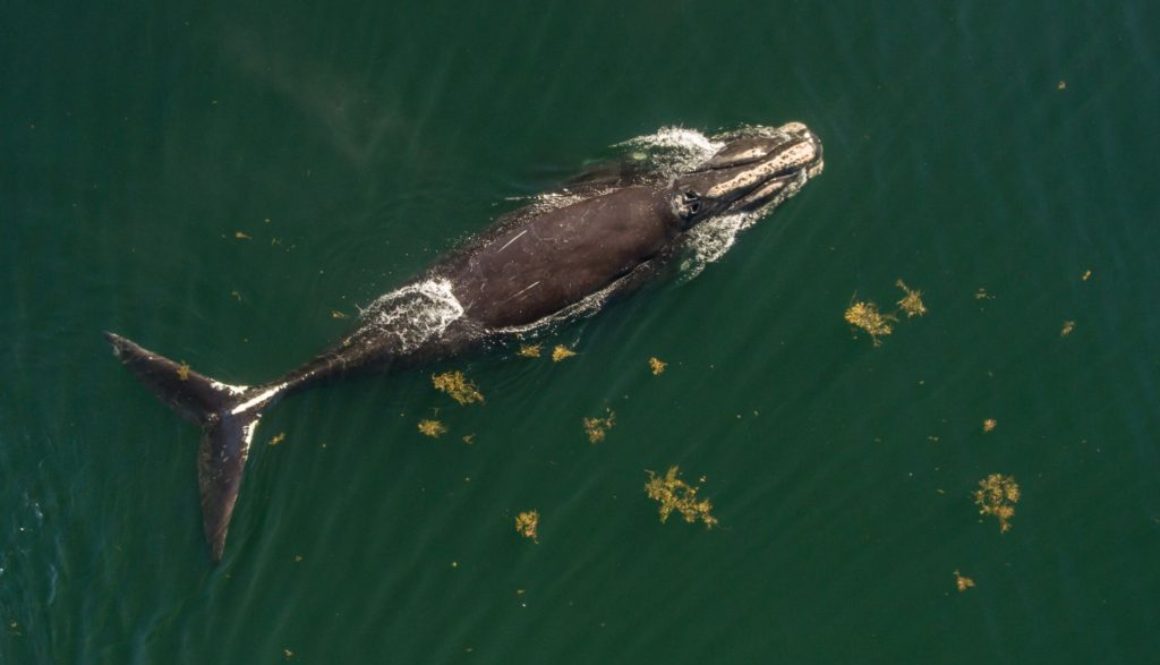
In the last few years, we New Brunswickers have become more and more aware of the North Atlantic right whale and the dangers facing this small, but special, population. Each year, the right whale migrates into Canadian waters for a feeding frenzy. Despite years of attention from Canadian governments and conservation groups, right whales are dying in Canadian waters and need our devoted and strategic action for protection. Here we answer five common questions you might have asked about the right whale this summer as it frequented the news.
1. Why are right whales endangered?
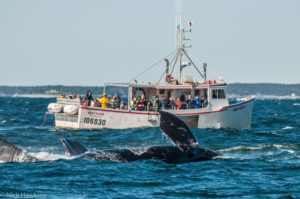
Right whale rolling in the Bay of Fundy, photo by Nick Hawkins.
Before the 1972 ban on commercial whaling in Canada, the North Atlantic right whale was a popular species for whalers. Nicknamed the “right whale to hunt”, right whales were hunted to near extinction for their valuable blubber. Right whales are slow swimmers that meander along the coasts near the ocean’s surface, putting them in close contact with humans and our activities at sea. Right whales are most threatened by the risk of deadly strikes by ships (imagine hitting a bumblebee with your car) and by the risk of entanglement in fishing gears, though new risks like increasing noise in the ocean may also threaten this species.
2. Why are right whale populations in the Gulf of St. Lawrence now?
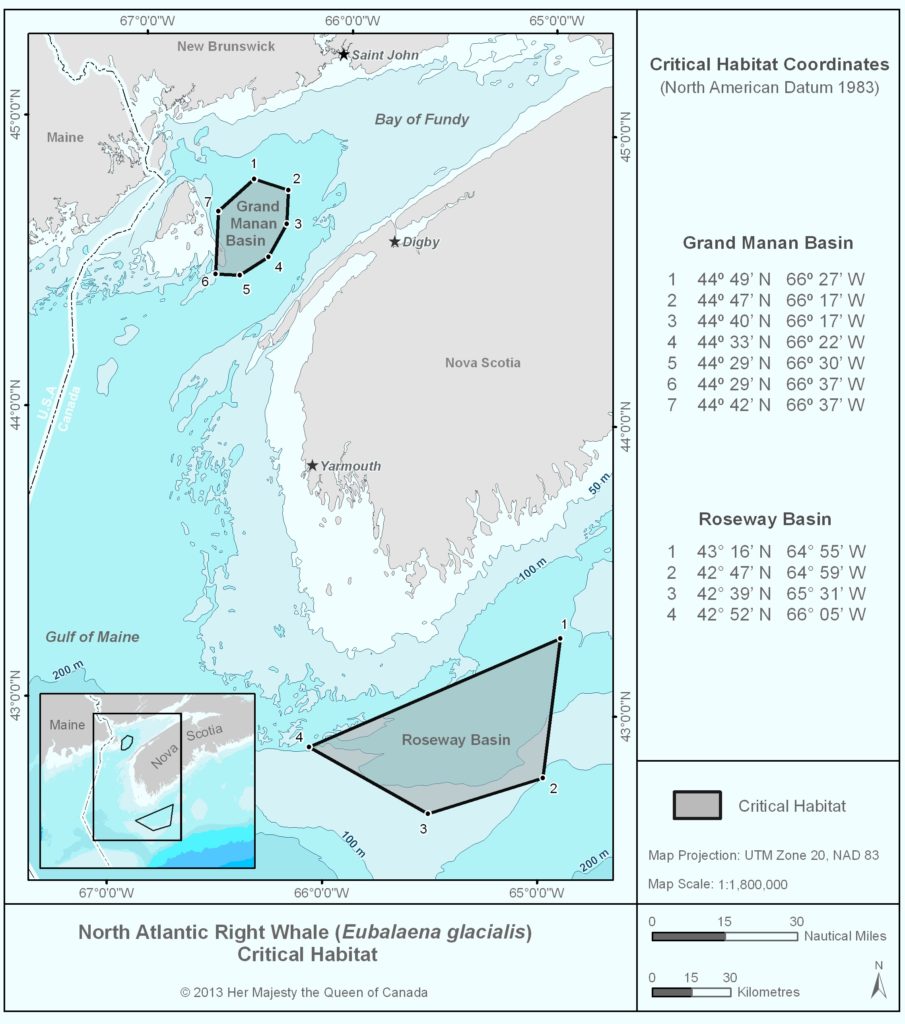
Since 2015, right whales have been spotted in higher numbers in the Gulf of St. Lawrence as they follow their favourite food, a tiny cold-water animal called a copepod. This change might be a response to climate breakdown, as waters to the south get warmer, copepods might be more abundant for eating in the Gulf. Currently, critical habitat for the right whale, areas that are legally protected under the Species at Risk Act (SARA), are designated near Grand Manan and southeast of Nova Scotia. As right whales become common visitors in other regions of Atlantic Canada, it is important that conservation actions can protect right whales in new critical habitats.
Right whale Critical Habitat areas designated, map by Fisheries and Oceans Canada.
3. How are we able to tell individual whales apart?
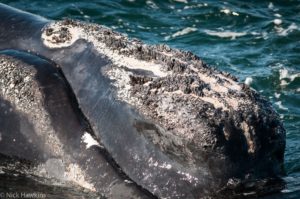
You may have noticed that scientists and conservation groups speak about right whales as if we know them—because we do! Right whales have unique white lumps and bumps on their heads that allow us to tell them apart like the tail of a humpback whale or our own fingerprints. They are the only whale species that has a symbiotic relationship with whale lice that form these “callosities”. The North Atlantic Right Whale Consortium manages a database of right whales from photos, videos, and, more recently, from fecal and skin samples. These databases have been in place for over 30 years, allowing us to track right whale families, whale health, and even give names to mothers and calves.
4. What is Canada doing to protect the right whales?
Right whale in the Bay of Fundy, notice the callosity pattern giving the whale a unique ID. Photo by Nick Hawkins.
Since 2017, our federal government has taken action to slow down big ships in more and more areas in the Gulf of St. Lawrence when whales are present, reducing the risk of deadly collisions between ships and whales. To reduce the risk and impacts of entanglement, new temporary fishing closures are in place and support has been given to organizations who respond to distressed whales, including whales that need to be disentangled. New efforts have also been made to monitor the Gulf, looking for right whales from overhead flights and funding research aimed at understanding and protecting the whales. While these new actions are encouraging, there is still a lot of work to do! Right whales are at a very real risk of extinction, and this has caught the attention of governments, conservation organizations, and communities across Atlantic Canada.
5. How can I help to protect the right whales?
Hearing of another right whale entangled, another ship-struck individual, another floating carcass makes us wonder what we can do to help this hurting species. Here are a few ideas:
If you’re lucky enough to get to watch right whales, remember to stay far enough away to enjoy their presence from a respectful distance.
Take action by supporting our friends at the Marine Animal Response Society in their current fundraising campaign to support programs for marine animals in distress. Hurry, the campaign closes this Friday, August 30. Donate here.
Keep reading up on the right whale and share news with your family and friends. We need everyone to understand the urgent need to vocally support action to protect this endangered species!
Tell your government representatives that protecting the right whale is important to you – your voice in standing up for wildlife is important!
You can support the conservation work of CPAWS-NB to get more people standing up for ocean and whale conservation here.
Julie Reimer is a PhD student at the Memorial University of Newfoundland and a Board Member of CPAWS-NB. Having worked in the whale watching industry in New Brunswick and conducted her Master’s research on conservation planning for the North Atlantic right whale, Julie is an advocate for MPAs in New Brunswick. Julie’s current research attempts to see the “bigger picture” of conservation, reaching beyond protected areas to understand the synergies between conservation actions and ocean industries. To connect with Julie, visit http://juliereimer.wixsite.com/hello.
As New Brunswick Day festivities unfold over the weekend, there could be no better time to celebrate the astounding wildlife and wilderness of our province. At CPAWS-NB, we celebrate nature all year round and we invite you to share in the celebrations with our social media pages, community events, and our very own blog. Next week, our blog will reach its first major milestone: one year of celebrating New Brunswick’s wilderness through stories, science, and advocacy!
Photo by Nick Hawkins
This year our blog has come to life to share New Brunswick’s nature and our conservation mission with you! Through 27 blog posts written by four dedicated volunteers, we’ve been able share our work with you – encouraging New Brunswickers to explore ecosystems from forests to coasts, to make conservation a part of our daily lives, and to engage with decision-makers when it comes to protecting New Brunswick’s natural areas.
We have explored our forest ecosystems, from the importance of conservation and sustainable forestry management in New Brunswick to the Top 10 Underrated Species of the Acadian Forest. If you’re out enjoying forests over the summer months, don’t forget to check out our post on spotting forest birds! Out of the forest and into the sea, our focus on increasing marine protected areas in the province has shone through the blog. This June, we listed 5 Reasons to Protect the Bay of Fundy and have given you reason to turn from sightseer to supporter of conservation projects, like marine protected areas, in the Bay. We’ve even broken down what exactly a marine protected area is in Canada! Our projects across ecosystems in New Brunswick inspires us and we hope it inspires you, too!
Photo: CPAWS NB
Protecting wilderness on land and in the ocean should be important to all New Brunswickers – in many ways, our culture and our identities are tied to nature! This year we have encouraged you to take action for protecting nature in your daily lives, from low impact ways to connect with nature in provincial parks to setting your New Year’s conservation resolution. Through the stories we share and the lists we curate, we hope to inspire New Brunswickers to get outside for their daily dose of Vitamin N(ature) and to enjoy nature in all seasons! We also hope to strengthen your voice when speaking up for nature as we all work together to protect our province’s beautiful and important places.
This year we shared the work of scientists to tell the Canadian conservation story: Canada is a Conservation Super-Nation with an important responsibility for taking action, and most Canadians agree that about half of our land and ocean areas should be protected. Conservation is a smart insurance policy in New Brunswick and across Canada for a sustainable future where our communities and wildlife thrive in a healthy environment.
As our blog continues to blossom in the coming year, we hope to ignite a love of nature and a passion for conservation action among New Brunswickers. The staff and volunteers of CPAWS-NB wish you a happy and safe New Brunswick Day, and hope you’ll enjoy some time outside in the wilderness this weekend!
Interested in contributing to our blog? We’re looking for help! Fill out a quick volunteer application today!
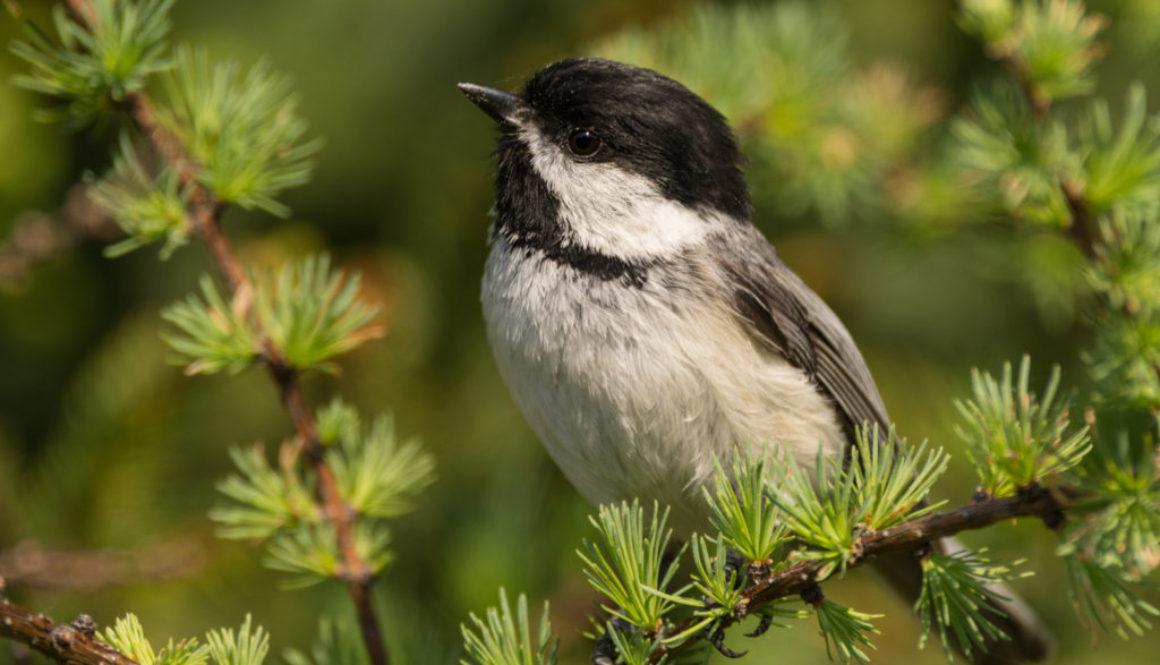
Header photo of New Brunswick’s Black-Capped Chickadee on Grand Manan by Nick Hawkins.
Julie Reimer, CPAWS NB
Julie Reimer is a PhD student at the Memorial University of Newfoundland and a Board Member of CPAWS-NB. Having worked in the whale watching industry in New Brunswick and conducted her Master’s research on conservation planning for the North Atlantic right whale, Julie is an advocate for MPAs in New Brunswick. Julie’s current research attempts to see the “bigger picture” of conservation, reaching beyond protected areas to understand the synergies between conservation actions and ocean industries. To connect with Julie, visit http://juliereimer.wixsite.com/hello.
Each year as June approaches our office is energized and preparing for a busy summer of conservation work. At the same time, as the weather warms, as the migratory birds return, as the flowers bloom, students get busy searching for the perfect summer job. This year we are lucky to have had four passionate students as unique as their favourite New Brunswick species and ecosystems join the CPAWS-NB team. Meet Benuelle, Grace, Lauren, and Rachael!
We are so fortunate at CPAWS-NB to have the help of these young women, and we thought you would want to get to know them, too! With that in mind, we asked each of them to answer a few questions about their experience with CPAWS-NB (so far) and what inspires their love of nature in our beautiful province.
What makes you passionate about conservation in New Brunswick?
Meet Benuelle! Benuelle is entering her fourth year of study at the University of New Brunswick.
Benuelle: New Brunswick has been my home for the last 10 years and this place holds a special place in my heart. Whenever I think about what mother nature looks like, I always picture New Brunswick in my mind. This province has so much to offer, not only its beauty, but also the species that live here. We are lucky to live in a very beautiful place with plenty of untouched nature. I think it is important conserve what we have so that the next generation will also get to experience the natural beauty of New Brunswick, as well as preserve the health of our wild ecosystems.
Grace: From a young age I have had a strong connection to nature and have known early on that this was an important part of my purpose on this planet. Growing up surrounded by New Brunswick’s beautiful wildlife has made me all the more passionate about protecting my home for future generations to thrive in.
Lauren: Ever since I was a child, I loved nature and the outdoors. You could always find me running around outside, climbing trees and getting my hands dirty. The intrinsic value of nature was instilled in me from a very young age. As I got older, I really began to appreciate all the natural areas we have in New Brunswick – beautiful old forests, pristine rivers, rising mountains and vast beaches. As an adult, I hope to preserve the nature that I fell in love with as a child, for the wildlife that lives there and for my future children to enjoy one day.
Rachael: Living in St. Martins, I was constantly surrounded by nature. My family was always going for hikes in the woods behind my house, going to the beach to play in the mudflats, heading to the Fundy Trail to explore the hiking trails there and even kayaking in and around the St. Martins sea caves. I’m passionate about conservation in New Brunswick because I want to ensure that people for generations to come can enjoy the amazing nature that I experienced growing up!
What is your favourite New Brunswick species or ecosystem?
Benuelle: My favourite NB ecosystem is found at New River Beach Provincial Park.
Meet Grace! Grace is entering her second year of study at St. Thomas University.
Grace: My favourite NB species, an unpopular opinion, is the dandelion because of their underrated medicinal and healing properties.
Lauren: I am a huge fan of forests and birds. My favourite bird is the red breasted nuthatch – it’s small but mighty!
Rachael: My favourite NB ecosystems are wetlands!
What have you learned about conservation work during your time with CPAWS-NB?
Benuelle: My time with CPAWS-NB made me realize how much of New Brunswick is unprotected and how important it is to protect these areas. New Brunswick natural areas are home to many diverse wildlife and unique plant species, and it is very unfortunate that with all the beautiful things our province has to offer, we hold the worst record in Canada for protecting nature. We need to conserve the diversity of natural areas in New Brunswick. This is why I love working with CPAWS-NB: this organization promotes the protection of New Brunswick’s wild ecosystems.
Grace: Working with CPAWS-NB has truly been one of the most valuable experiences I have had. I have learned so much about the importance of working collaboratively with government, Indigenous Peoples, and other organizations as a team to enact change. I have also come to understand just how important sharing my love of nature can be, helping others to gain respect for our planet, encouraging them to cultivate their own harmonious relationships with the natural world. Leading by example and with love is crucial to conservation work, and CPAWS truly embodies this practice.
Meet Lauren! Lauren is entering her fourth year of study at the University of New Brunswick.
Lauren: I’ve learned a lot about ocean conservation and marine protected areas during my time with CPAWS-NB. I’ve learned that in the last three years Canada has made tremendous progress in protecting more ocean areas; however, New Brunswick is lagging – protecting less than 1% of our coastal areas, which is far from our goal of protecting at least 10% of marine and coastal areas by 2020. This really put into perspective for me how influential the work we do at CPAWS-NB is, and how valuable works like the CPAWS Dare to be Deeper report are for making a difference in our province.
Rachael: During my time at CPAWS NB, I have learned a lot about the challenges currently facing conservationists in New Brunswick, but also a lot about the positive work being done in our province! There are so many wonderful organizations working to protect nature, some of which I hadn’t heard of before joining CPAWS-NB. Working here has taught me how important it is to get more people involved in the conversation about protecting our province’s natural areas!
What will you be doing come September?
Benuelle: In September, I will be going into the final year of my undergraduate degree in Biology at UNB and will be taking the marine block to learn more about the ocean ecosystems. My experiences with CPAWS-NB has inspired me to keep advocating for the things I am passionate about and hopefully to engage in more volunteer work related to conservation in the fall.
Grace: In September, I will be heading into the second year of my Bachelor of Arts degree at STU where I plan to complete a double major in Environment and Society and Women’s and Gender Studies. This will combine my passion for the environment and social justice, helping me to continue to acquire the knowledge and skills I need for creating the world I wish to see.
Lauren: In September I will be heading back to UNB to finish the last year of my degree in Environment and Natural Resources. I’m looking forward to completing my education and to get out in the working world – and to hopefully make a difference for wildlife in New Brunswick!
Meet Rachael! Rachael is entering her fourth year of study at the University of New Brunswick.
Rachael: In September, I will be starting the last year of my Bachelor of Science in Environment and Natural Resources with a specialization in water resources management at UNB Fredericton.
Having one student join our team can be a great help each summer; but having four students as dedicated and enthusiastic as these four young women has been an experience we won’t forget! Now that you’ve met the summer students, you’ll surely agree that we hit the jackpot this year!
Look for the CPAWS-NB team and Benuelle, Grace, Lauren, and Rachael at our events around the province this summer! You can even join us this Saturday, July 20 for Parks Day at New River Beach Provincial Park.
Check our Facebook page for regular updates on CPAWS-NB events.
Julie Reimer, CPAWS NB
Julie Reimer is a PhD student at the Memorial University of Newfoundland and a Board Member of CPAWS-NB. Having worked in the whale watching industry in New Brunswick and conducted her Master’s research on conservation planning for the North Atlantic right whale, Julie is an advocate for MPAs in New Brunswick. Julie’s current research attempts to see the “bigger picture” of conservation, reaching beyond protected areas to understand the synergies between conservation actions and ocean industries. To connect with Julie, visit http://juliereimer.wixsite.com/hello.
À l’approche de la Journée des parcs, la Société pour la nature et les parcs du Canada (SNAP) salue les efforts déployés par le Canada pour respecter ses engagements de protection du territoire d’ici 2020 et exhorte le gouvernement fédéral à jour un rôle de premier plan pour la promotion d’objectifs de conservation ambitieux et fondés sur des données probantes pour la prochaine décennie, qui permettront de contrer la dégradation continue et catastrophique de la nature. Dans son dernier rapport, ” La nature en crise : le Canada doit intensifier les mesures de conservation ”, la SNAP demande au Canada qu’il se fasse le chef de file pour la promotion d’un objectif de protection et de restauration d’au moins la moitié de la planète et d’une cible clé de protection de 30 % des terres et des eaux intérieures d’ici 2030, et qu’il s’engage à atteindre ces objectifs sur son propre territoire
Dans le cadre de la Convention sur la diversité biologique de l’ONU, le Canada s’est déjà engagé à protéger au moins 17 % de ses terres et de ses eaux intérieures d’ici 2020. En 2018, le gouvernement fédéral a octroyé plus de 1,3 milliard de dollars à la conservation de la nature, l’investissement le plus important de l’histoire du Canada dans ce domaine, et a mobilisé les administrations publiques, les peuples autochtones, les ONG et d’autres partenaires pour que tous œuvrent de concert à l’atteinte de cet objectif. Alors que l’échéance de 2020 pointe à l’horizon et que seulement 11,8 % du territoire du Canada, et 4,6 % du Nouveau-Brunswick, est protégé à date, on peut dire qu’il reste encore du travail.
« Au Nouveau Brunswick, notre gouvernement a exprimer leur intérêt à conserver plus d’aires naturelles à participer dans les rendez-vous à l’échelle du pays pour discuter quelles actions pourraient être prises. Cependant, le gouvernement du Nouveau-Brunswick n’a pas annoncé leurs intentions et nous attendons toujours le plan d’action du Nouveau-Brunswick » dit Roberta Clowater, la directrice exécutive de la SNAP Nouveau-Brunswick.
Dans une étude publiée en mai 2019, la Plateforme intergouvernementale scientifique et politique sur la biodiversité et les services écosystémiques (IPBES) a constaté que la nature décline « plus vite que jamais dans l’histoire de l’humanité » et que plus d’un million d’espèces sont menacées d’extinction, dont un grand nombre dans la prochaine décennie si des mesures radicales ne sont pas prises pour changer la situation. D’après cette étude, la perte et la dégradation des habitats provoquées par les perturbations anthropiques apparaissent comme les principaux facteurs à l’origine de cette crise écologique.
« Nous espérons que le Nouveau-Brunswick recueillera le désir politique à protéger les aires naturelles qu’on a besoin pour appuyer notre population d’humain et la faune. SNAP N-B encourage la province à prendre des mesures en retard depuis longtemps pour établir une voie navigable de la région sauvage Restigouche. Nous espérons aussi à protéger nos forêts et leurs habitants qui restent autour de la province y compris les terres humides, aires costaux, aires naturelles importantes et nos aires naturelles désigné pour l’eau potable. »
Le rapport contient les étapes spécifiques pour Nouveau-Brunswick, y compris plus d’interactions et la solidification de nos relations avec les peuples indigènes et incluant les gens du Nouveau- Brunswick dans un plan pour la protection de la nature à protéger les espaces le plus sauvage, la flore et la faune qui l’habitent et l’habitat qui va t’appuyer.
-30-
Lire le rapport complet [lien];
Contacts :
Alison Woodley, Conseillère stratégique, SNAP
awoodley@cpaws.org | Cell : 613-203-1172 Bureau : 613-569-7226 p. 230
(en anglais): Roberta Clowater, SNAP Nouveau-Brunswick, rclowater@cpaws.org ; 506-452-9902
À propos de la Société pour la nature et les parcs du Canada
La Société pour la nature et les parcs du Canada (SNAP) est le seul organisme de bienfaisance pancanadien qui se consacre exclusivement à la protection de nos terres publiques, de nos océans et de nos eaux intérieures, et qui veille à ce que nos parcs soient gérés de manière à protéger la nature. Au cours des 56 dernières années, nous avons joué un rôle de chef de file pour assurer la protection de plus d’un demi-million de kilomètres carrés de milieux naturels, une superficie plus vaste que celle du Yukon! Notre vision est de protéger au moins la moitié des terres publiques, des océans et des eaux intérieures du Canada pour le plus grand bien des espèces sauvages et des êtres humains.
Roberta Clowater, executive director of CPAWS NB, interviewed by CBC NB radio program, Shift.
July 17, 2019, Fredericton – In advance of Canada Parks Day, the Canadian Parks and Wilderness Society (CPAWS) is welcoming Canada’s efforts to meet our 2020 land protection commitments and urging governments across Canada to champion ambitious, evidence-based conservation targets to tackle the on-going catastrophic and accelerating decline of nature. In its latest report, “Canada’s Nature Emergency: Scaling up Solutions for Land and Freshwater”, CPAWS calls on Canada to promote a global goal of protecting and restoring half the earth, with a milestone target of protecting at least 30% of land and freshwater by 2030, and to commit to this at home.
Under the UN Convention on Biological Diversity, Canada has already committed to protecting at least 17% of land and freshwater by 2020. In 2018 the federal government committed over $1.3 billion for nature conservation – the largest such investment in Canadian history – and brought together public governments, Indigenous peoples, NGOs and other partners to work together towards this target. With a year and a half to go, and only 11.8% of Canada’s land base and 4.6% of New Brunswick’s protected, there is still more work to do.
“In New Brunswick, our government has expressed interest in conserving more land, and the province has participated in nation-wide meetings to discuss which actions could be taken. However, the New Brunswick government has not made any announcements about its intentions, so we are still waiting for a New Brunswick action plan,” says Roberta Clowater, CPAWS New Brunswick Executive Director.
A May 2019 assessment by the Intergovernmental Science-Policy Platform on Biodiversity and Ecosystem Services (IPBES) found that nature is declining “faster than at any time in human history,” with 1 million species facing extinction, many in the next decade, unless transformative action is taken. The study says that the primary driver of this crisis is habitat loss and degradation due to human-caused land use change.
“We are hopeful that New Brunswick will gather the political will to protect the natural areas we need to support human and wildlife communities. CPAWS NB urges the province to take long overdue action to establish a Restigouche Wilderness Waterway, and to protect our remaining old forest habitats, provincially significant wetlands, coastlines, and natural areas in our drinking water watersheds.”
The report includes specific next steps for New Brunswick, including deepening relationships and partnering with Indigenous communities, and involving New Brunswickers in a nature protection plan to protect our most special wild places, the wildlife that call them home, and the habitat that supports us all.
For interviews, contact: Roberta Clowater, rclowater@cpaws.org ; phone: 506-452-9902
About Canadian Parks and Wilderness Society
For over 56 years, CPAWS has been working with all levels of government, and other partners across the country, to protect more of Canada’s public lands and water – for the benefit of both wildlife and people. As Canada’s only nationwide charity dedicated solely to the protection of our public land, ocean and freshwater, and with chapters in almost every province and territory across Canada, we are uniquely positioned to help governments protect what nature really needs.
Roberta Clowater, executive director of CPAWS NB, interviewed by CBC NB radio program, Shift.
“Endangered species” is a term most of us are familiar with. We know that endangered species need to be protected, that they are often threatened by human activities, and that we risk losing these plants and animals from our ecosystems. Around the world, more than 27,000 species are at risk of going extinct, but what does it really mean for a species to be “endangered” in Canada?
What some of us might not know is that legal actions to protect these species are taken through Canada’s Species at Risk Act, often called “SARA”. Under SARA, a species can be listed as “extirpated”, “endangered”, “threatened”, or a “species of special concern”. Each of these categories means something a little different and changes the amount of protection given to a species.
Extirpated species no longer exist in one region of Canada, but they do exist in the wild in another area. Before the end of the 1800s, Atlantic Canada had its own population of grey whales. We know that this species existed here, but also that it doesn’t anymore, making the grey whale extirpated in Atlantic Canada.
Photo by Nick Hawkins
Endangered species are those are that likely to become extirpated or extinct in the near future. These are the species that need our attention and fast action to protect habitat and eliminate threats. Our struggling friend the North Atlantic right whale has been listed as endangered under SARA since 2003 and the iconic piping plover has been listed as endangered since 2001.
Threatened species are those that are likely to become endangered if we don’t do anything to reduce or eliminate the threats that are impacting the population. New Brunswick’s own wood turtle has been listed as threatened under SARA since 2010, though was only listed as threatened under the New Brunswick Endangered Species Act in 2013.
Here is where it gets more complicated (yes, more complicated). The final category of SARA is a “species of special concern”. Under this category, species are given much less protection than species that are listed as extirpated, endangered, or threatened.
Photo “harlstretch” by peggycadigan is licensed under CC BY 2.0
Species of special concern are those that might become threatened or endangered in the future because of their biology, like what they eat or what they need for habitat, or because of human activities. Some species of special concern in our province include the harlequin duck and the monarch butterfly.
Extirpated, endangered, and threatened species are protected from being killed, harassed, harmed, or captured by humans, while species of special concern are not given this same insurance. Similarly, the most important habitats, called “critical habitat”, are protected for extirpated, endangered, and threatened species only. When a species is listed as extirpated, endangered, or threatened, SARA requires that the government creates a “recovery strategy”. This requirement is one of the most important aspects of SARA because it requires the government to make an action plan that will help the species population rebound back to a healthy number. The recovery strategy for the North Atlantic right whale has resulted in some important actions in New Brunswick, like the creation of a protocol for rescuing whales caught in fishing gear and the relocation of shipping lanes in the Bay of Fundy to reduce the number of whales struck by commercial ships [1].
Photo “Freeing Entangled Right Whale” by Georgia Wildlife Resources Division is licensed under CC BY-NC-SA 2.0
As a piece of federal legislation, SARA is only able to protect species in federal lands and waters, which leaves some species in provincial land, freshwater, and coastal ecosystems exposed to threats. We all know that wildlife doesn’t pay attention to our human boundaries, so New Brunswick needs to work just as hard to ensure that species at risk are protected in our province and fast action is taken toward conservation.
SARA is designed to protect the plants and animals that need our help the most, but it is not as strong at protecting species that might need our help in the future as climate continues to breakdown and ecosystems shift. This is why it is so important to protect all sorts of habitats that are home to all sorts of species: we need to ensure that all New Brunswick wildlife have what they need to survive and thrive in an unknown future.
CPAWS-NB is working tirelessly to support action from our governments to see the creation of protected area networks on land and at sea. These networks can help species at risk in all SARA categories by reducing threats from human activities and ensuring healthy habitat now and into the future. But to reach this goal, we need your help! By speaking up for nature and telling our governments that we need protected areas, we can help to protect New Brunswick’s wildlife and the ecosystems that make our province special.
If you’re worried about the North Atlantic right whale like many Canadians, take action with our friends at the Sierra Club Canada Foundation in an emergency letter-writing campaign here.
[1] Brown, M.W., Fenton, D., Smedbol, K., Merriman, C., Robichaud-Leblanc, K., and Conway, J.D. 2009. Recovery Strategy for the North Atlantic Right Whale (Eubalaena glacialis) in Atlantic Canadian Waters [Final]. Species at Risk Act Recovery Strategy Series. Fisheries and Oceans Canada. vi + 66p.
Julie Reimer, CPAWS NB
Julie Reimer is a PhD student at the Memorial University of Newfoundland and a Board Member of CPAWS-NB. Having worked in the whale watching industry in New Brunswick and conducted her Master’s research on conservation planning for the North Atlantic right whale, Julie is an advocate for MPAs in New Brunswick. Julie’s current research attempts to see the “bigger picture” of conservation, reaching beyond protected areas to understand the synergies between conservation actions and ocean industries. To connect with Julie, visit http://juliereimer.wixsite.com/hello.