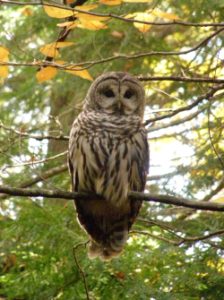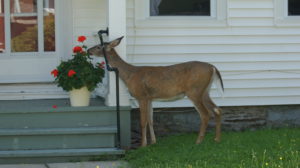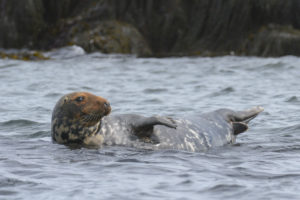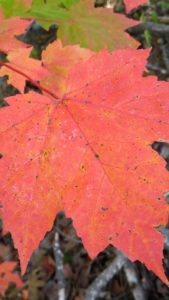

From microscopic organisms to seed-hoarding birds to the tallest trees, an ecosystem is a collection of individual plants and animals in careful balance. Just like in your workplace, circle of friends, or each organism has an important role to play. Some examples include:
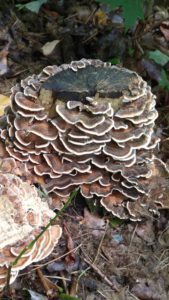
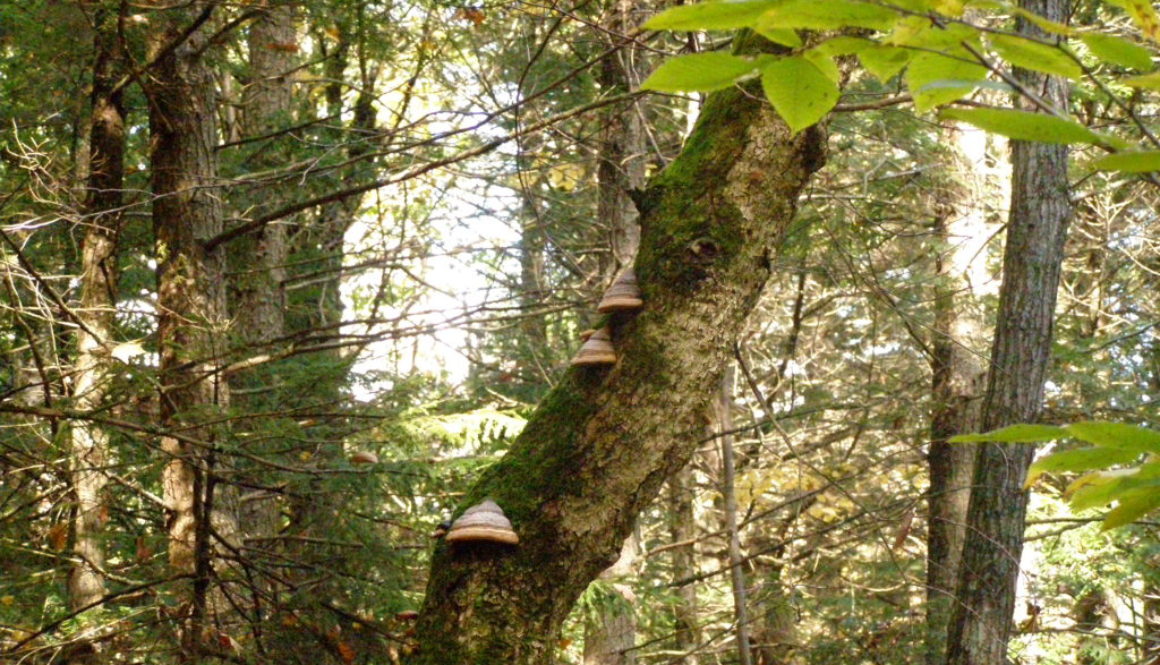
The garbage collector – the person in your life who will lick everyone’s plate and never lets food go to waste. In an ecosystem, this might be fungi or decomposing bacteria. These species work to breakdown decaying organisms and recycle their nutrients back into the ecosystem.
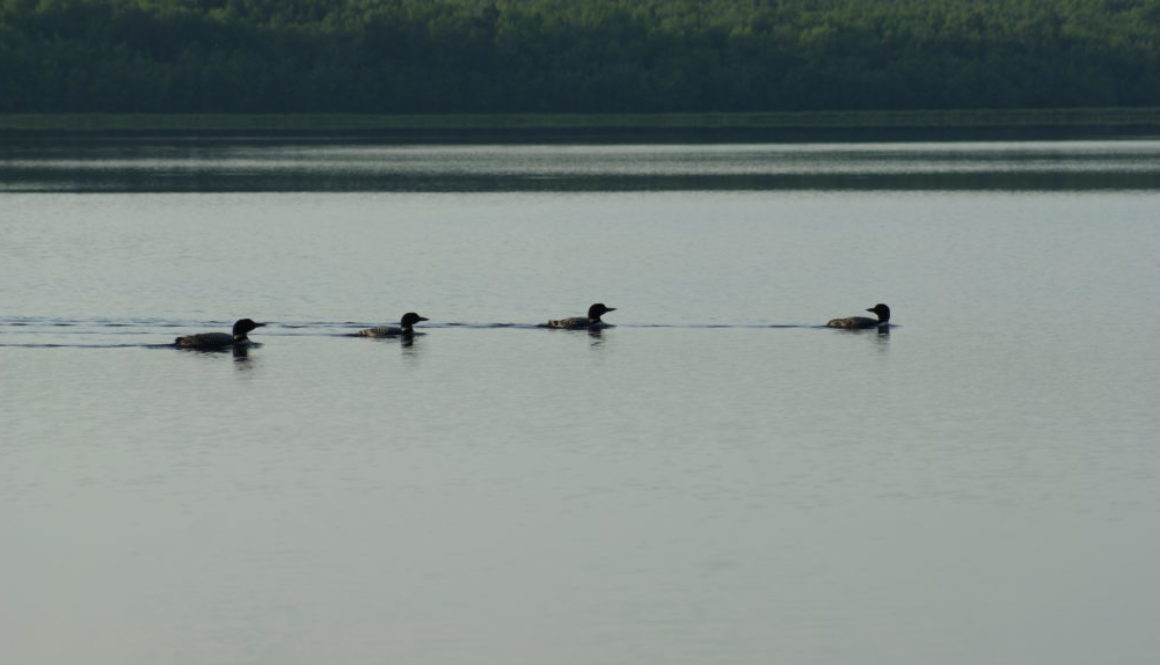
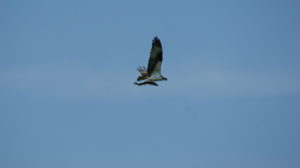
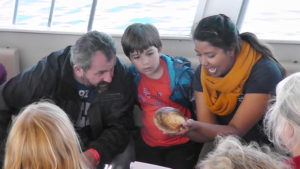
Photo by Steve ReidThe one who always has food – possibly the mom of the group. Alternatively, “primary producers” in an ecosystem, which are all of the organisms (such as plants) that can make their own food, usually through photosynthesis. The primary producers are essential to the food chain, creating the baseline energy that all other organisms rely on.
The one who holds you all together – your boss, your family’s matriarch, or your most organized friend. In ecosystems, some species have the important job of physically holding the ecosystem together. For example, the roots of trees or underground stems of grasses help to hold soils in place.
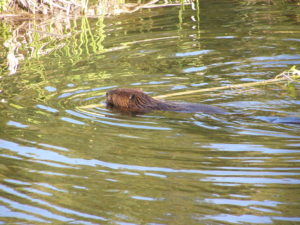
The engineer – some species are exceptionally good builders, like your friend who could make anything from popsicle sticks and a roll of tape. Consider beavers: when beavers dam a waterway, they are changing the way that ecosystem works. These species build, change, and maintain habitats in the ecosystem.
The control freak – someone who has more control than others over how the rest of the group acts. In an ecosystem, this could be a “keystone species”, often predators who control populations of prey. Without these species, ecosystems tend to look and work entirely different.
Organisms aren’t just grouped by the typical food chain – producers, consumers, predators, decomposers – they can also be grouped based on shared behaviours and their roles in creating a healthy ecosystem. In ecosystem conservation, the goal is to protect as many organisms in each role as possible. Instead of protecting just species that are threatened or endangered, we need to protect a collection of species whose behaviours support the health of others. Instead of protecting only one species in each role, we need to protect multiple species to create some redundancy and resilience to unexpected change, like wildfire or floods.
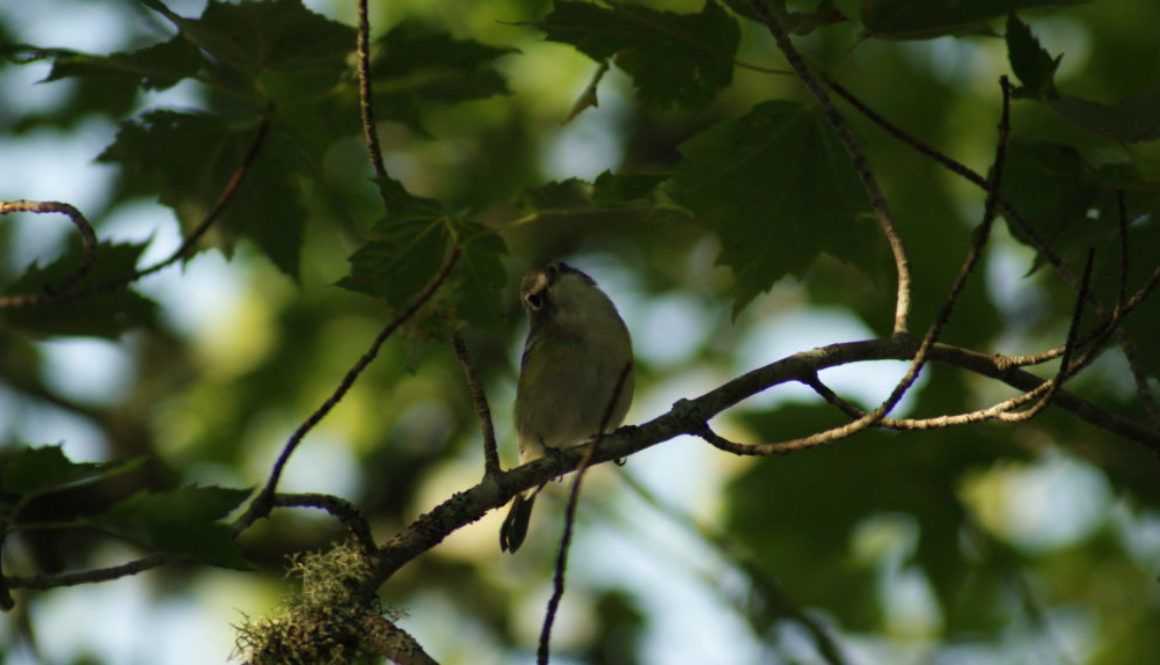
Photo by Julie Reimer
Protected areas designed to include multiple species within each role are well-equipped to preserve a healthy functioning ecosystem into the future. When protected areas are large enough and well-managed to reduce threats from industry and development, they can ensure that biodiversity is in balance.
CPAWS-NB sees protected areas on land and at sea as the best opportunity to conserve and restore ecosystems. Currently, New Brunswick lags behind other Canadian provinces in creating protected areas, but in the Pathway to Canada Target 1, New Brunswick has an opportunity to contribute to Canada’s goals of protecting 17% of land and freshwater by 2020. CPAWS-NB is eager to work together with Indigenous, federal, provincial, and municipal governments in creating protected areas that secure our habitats for the benefit of all New Brunswickers.
Julie Reimer is a PhD student at the Memorial University of Newfoundland and a Board Member of CPAWS-NB. Having worked in the whale watching industry in New Brunswick and conducted her Master’s research on conservation planning for the North Atlantic right whale, Julie is an advocate for MPAs in New Brunswick. Julie’s current research attempts to see the “bigger picture” of conservation, reaching beyond protected areas to understand the synergies between conservation actions and ocean industries. To connect with Julie, visit http://juliereimer.wixsite.com/hello.
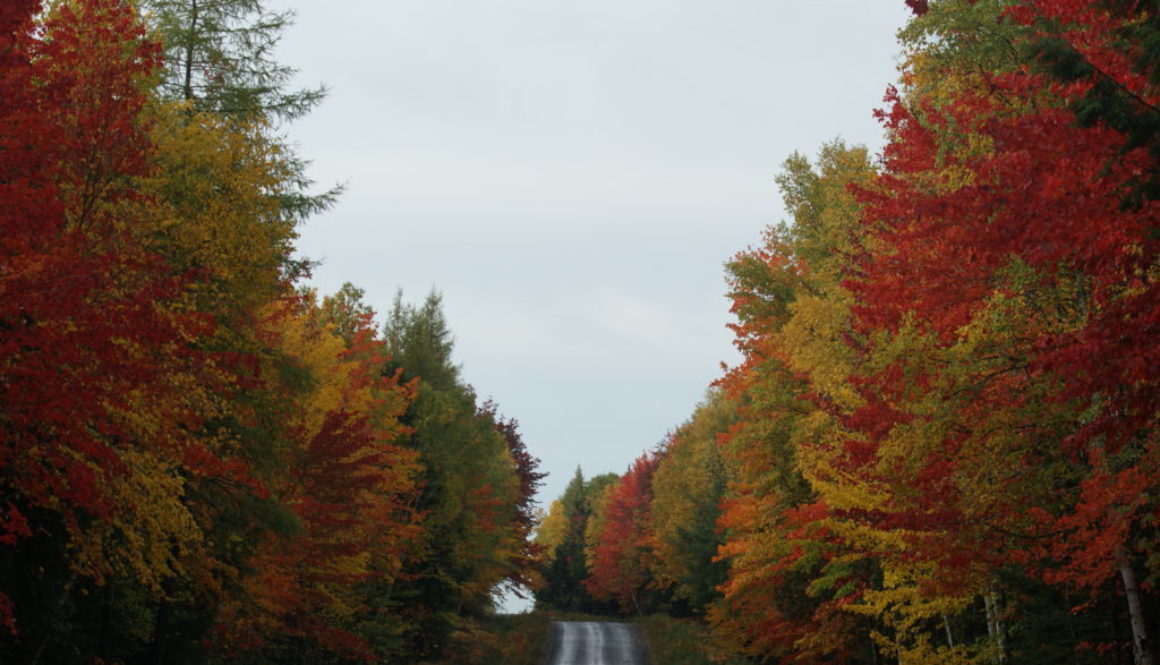
The nature of New Brunswick is nothing short of astounding—with coasts on three sides, expansive winding rivers, and more than 200 lakes, this province is home to all kinds of ecosystems, habitats, and landscapes. But what most people think of when it comes to New Brunswick’s backdrop are the trees. When people visit for the first time they are struck by the lush green mixed forests that dominate the landscape, making day trips more scenic and wildlife so abundant.
The forests of New Brunswick build deep roots for culture, biodiversity, and the economy. They provide all kinds of important services to New Brunswickers: storing carbon and helping to reduce impacts from climate change; helping to cycle the nutrients that all life depends on; preventing flooding by holding water in their soils, and creating a sense of ease, happiness, and spirituality for the masses. Two of New Brunswick’s major industries, tourism and forestry, depend on our vibrant and resilient forest. It is without doubt that forests are among the most important resources in New Brunswick, and therefore should be managed with the utmost care.
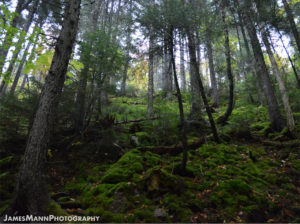
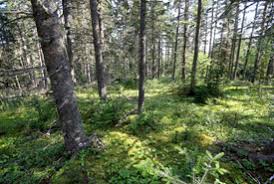
Fundy Park Forests, Photo by James Mann, Creative Commons License 2.0
Forests and forestry products are a renewable resource, which means that with proper management and a keen eye for sustainable use the industry can persist. Unfortunately, this seems to be easier said than done. All over the world in all sorts of industries, renewable resources are being depleted faster than they can recover and reproduce. We have not yet come to terms with the role of climate change in the management of forests. This can lead to unsustainable management that creates risk for industries and for the families, communities, and economies depending on their success.
When it comes to forests, sustainable management ensures that the industry can prevail, while also safeguarding forest ecosystems for the many other benefits they provide. CPAWS-NB looks to the important link between conservation and sustainable industry when it comes to the forests. When forests are protected from industrial development and extraction, they become more resilient and safeguarded against the unknown. Protected forests will continue to deliver the non-forestry benefits that are lost when trees are harvested, ensuring a productive forest ecosystem now and in the future.
Winter at Irishtown Reservoir, Photo by James Mann, Creative Commons License 2.0
This summer, the New Brunswick Department of Energy and Resource Development released a revised Forest Strategy that will, among other management strategies, allow the province to re-build commitments to conservation. The revised Strategy might open the door for increasing protected area coverage, which is currently only 4.6% of the province. CPAWS-NB is optimistic that this Strategy is a good start to building a foundation for conservation and hopes that the province will go further to make forest integrity and resilience an urgent priority in forestry management.
As put by the CPAWS-NB Executive Director, Roberta Clowater, “a modern Forest Strategy needs to have a serious insurance policy of significant areas where nature is permanently protected from industrial development.” Listen to an interview with Roberta on the Strategy and forest conservation in the province here.
As the provincial election approaches, consider New Brunswick’s forests before you cast your ballot. Remember that, as a province, we need to be working together to create a healthy industry rooted in a healthy forest, and this will mean a serious investment in protected areas.
Julie Reimer is a PhD student at the Memorial University of Newfoundland and a Board Member of CPAWS-NB. Having worked in the whale watching industry in New Brunswick and conducted her Master’s research on conservation planning for the North Atlantic right whale, Julie is an advocate for MPAs in New Brunswick. Julie’s current research attempts to see the “bigger picture” of conservation, reaching beyond protected areas to understand the synergies between conservation actions and ocean industries. To connect with Julie, visit http://juliereimer.wixsite.com/hello.
My first experience as a sightseer on the Bay of Fundy was nothing short of memorable. That is, it was memorable for everyone else because I, a three-year-old, slept through an entire whale watching cruise. From this, you might not expect that I’ve grown up to be an annual visitor to the Bay and, perhaps more unexpected, an ocean scientist. Getting back to the Bay each year reminds me why I do what I do, and why it is so important that sightseers like you take in the sweet and salty air of my favourite place in New Brunswick.
The Bay of Fundy is one of the Seven Natural Wonders of North America, so it’s not surprising that the region draws in tens of thousands of visitors each year! Whether you want to get out on the water or walk the seafloor, this attraction offers something for everyone. On the other hand, it might be surprising to you that this economically and environmentally important ecosystem has very little protection from unsustainable development and emerging threats. That’s why CPAWS-NB is encouraging the federal government to speed up action on marine protected areas, and to include the Bay of Fundy in that action.
Photo by Steve Reid
Between new schools, new jobs, and new homes, I’ve returned to the Bay each year to watch the wildlife, as a tourist and as a guide on a whale watching vessel. What you didn’t know is that I’ve also been watching you, visitors and tourists, as you experience this place, this second home of mine, for the first time. What I’ve learned is that there is no end to the awe and amazement of people experiencing the Bay first-hand. When people feel (and smell) the blow of a whale, watch a shimmering school of herring, or see the sunning harbour seals, they understand something about the Bay: it is a special place, and a place that should remain special for all of us to enjoy.
When I first smelled that stinky whale breath, I made an important transition: I went from sightseer to supporter.
When I learned that this place that was shaping my career (and my person) wasn’t properly protected, I took to action. Now, I don’t mean that you should all drop everything to go back to school in the name of the Bay. What I mean is, you have a voice as a sightseer, and a unique experience to share.
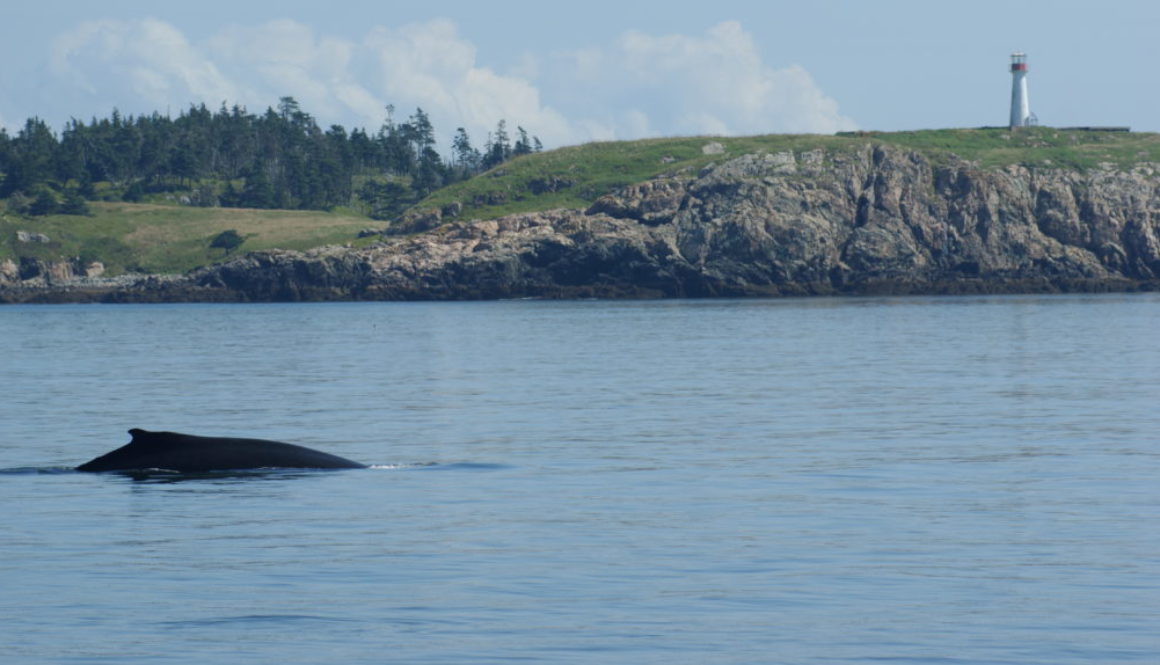
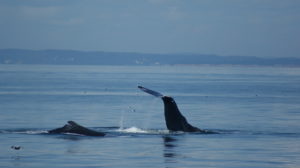
Humpback whales put on a show in the Bay of Fundy, 2018; Photo by Peter Reimer
Like me, maybe you’ve visited the Bay of Fundy each summer, feeling the sun and sand of a warm beach, enjoying the buttery seafood landed by local fisherfolk, or experiencing that unforgiving tangle of hair after a salty boat ride. Like me, you might feel inspired to take to action for the Bay. As a sightseer, a tourist, or a local, CPAWS is asking the public to strengthen our collective voice in asking the federal government to protect our oceans.
Protecting the Bay of Fundy should be a no-brainer, and CPAWS-NB hopes to see official marine protected areas out there sooner rather than later. Speaking up for the Bay is easy! Learn more about marine protected areas in the Bay of Fundy, visit: www.protectbayoffundy.ca
Haven’t had a chance to visit the Bay of Fundy yet? Plan your next Fundy adventure with the guidance of the Bay of Fundy Tourism Partnership.
Julie Reimer is a past Board Member of CPAWS-NB. Having worked in the whale watching industry in New Brunswick and conducted her Master’s research on conservation planning for the North Atlantic right whale, Julie is an advocate for MPAs in New Brunswick. Julie’s current research attempts to see the “bigger picture” of conservation, reaching beyond protected areas to understand the synergies between conservation actions and ocean industries. To connect with Julie, visit http://juliereimer.wixsite.com/hello.
A good insurance policy will protect you from an uncertain future; it will hedge against risk and allow you to respond in the event of an emergency. People invest in all sorts of insurance agreements, protecting themselves from accidents and events beyond their control. When it comes to the environment, the conservation of nature is a smart insurance policy.
The word “conservation” is becoming commonplace in the media, in political agendas, and in public discussions, but what does it really mean? At its core is a verb, to “conserve”, meaning to protect from harm or to maintain a certain state. “Conservation” is a noun, and in the context of nature it means to protect, preserve, or restore the natural world. When nature is protected, the natural state of ecosystems is maintained. In this state, ecosystems are healthy and functioning optimally, which means that they can continue to deliver the many goods and services that global society depends on for survival and wellbeing.
Ecosystem goods and services are the outputs of healthy ecosystems that provide benefits to humans. These include tangible goods, like food, timber, and other natural resources, and the less obvious services like air purification, nutrient cycling, and pollination. These goods and services underpin human life: our cultures, societies, and economies. If we are to protect ourselves from an uncertain future, which is imminent as climate change impacts are realized and biodiversity continues to decline, we need a good nature insurance policy.
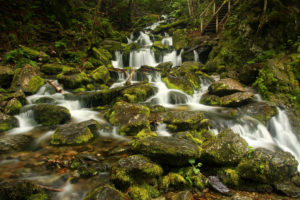
12 Little Waterfalls, Photo by Martin Cathrae; Creative Commons License SA 2.0
Through protected areas, we can reduce the risk of losing ecosystem goods and services. When ecosystems are protected, they remain productive and become resilient to change over time. A system of protected areas, or a network, further reduces this risk by maintaining larger-scale ecosystem functions and safeguarding habitat for diverse species. A strong system of protected areas will prepare our communities for when strong storms hit, when rivers flood, and when other climate change impacts occur unexpectedly. Protected areas can also help our communities to become more sustainable by preserving healthy ecosystems that can support our economy with the continued delivery of ecosystem services.
The Government of New Brunswick uses different mechanisms to protect land, including provincial parks, national parks, and Protected Natural Areas. Non-governmental conservation agencies, like our colleagues at the Nature Trust of New Brunswick and the Nature Conservancy of Canada, enhance the protected area system by preserving nature on private lands. Despite these efforts, over 95% of the province’s landscape remains unprotected (CPAWS, 2018), putting New Brunswickers, ecosystems, and wildlife at risk. CPAWS-NB is working to support the establishment of protected areas across the province’s ecosystems, both terrestrial and marine, to build a nature insurance policy for future New Brunswickers.
Stay up to date with CPAWS national actions to protect Canada’s wilderness through the Keep Canada Wild campaign, and in New Brunswick on our website.
To learn more about New Brunswick’s and Canada’s progress toward national protected area goals, browse the annual CPAWS Parks Report here.
Julie Reimer is a PhD student at the Memorial University of Newfoundland and a Board Member of CPAWS-NB. Having worked in the whale watching industry in New Brunswick and conducted her Master’s research on conservation planning for the North Atlantic right whale, Julie is an advocate for MPAs in New Brunswick. Julie’s current research attempts to see the “bigger picture” of conservation, reaching beyond protected areas to understand the synergies between conservation actions and ocean industries. To connect with Julie, visit http://juliereimer.wixsite.com/hello.
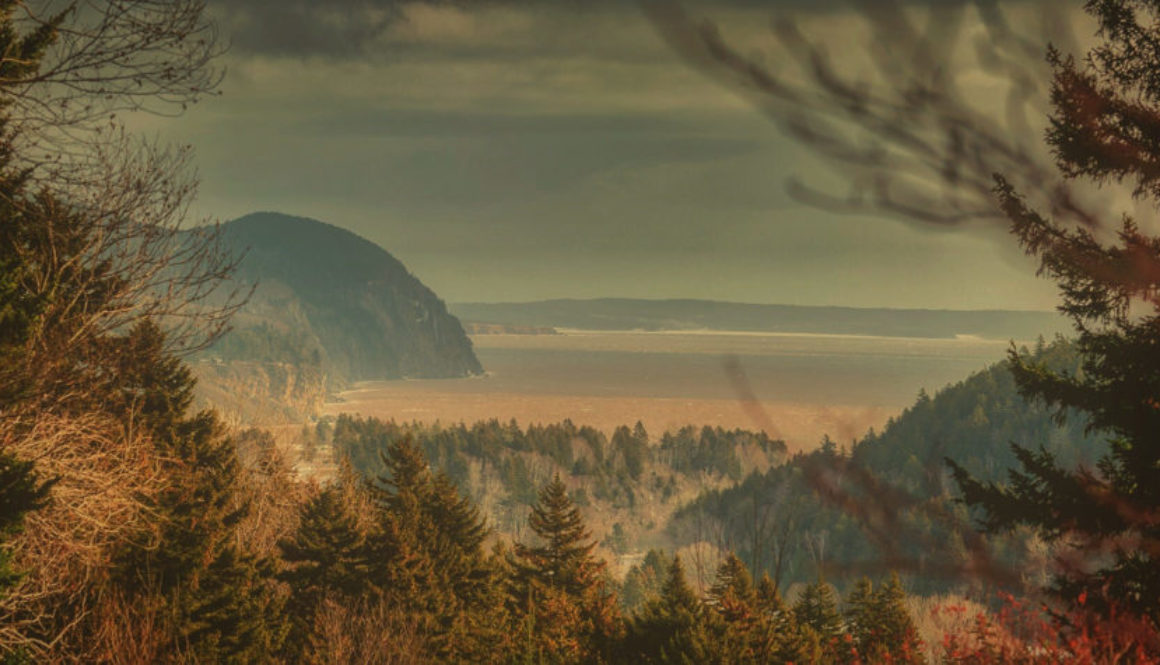
Heading photograph:Dickson Falls Trailhead Lookout – Fundy National Park, New Brunswick, Photo by James Mann; Creative Commons License 2.0
The Canadian Parks and Wilderness Society (CPAWS) welcomes the release of the updated Forest Strategy from the New Brunswick Department of Energy and Resource Development. While there are still gaps in this plan, we are looking forward to concrete action on protected areas. CPAWS NB is encouraged that the strategy will re-instate conservation policies (over five years) for some old forests and wildlife habitats that lost those protections in 2014. The strategy recognizes the importance of the long-term conservation of biodiversity, and the need to involve and respect the knowledge and rights of Indigenous Peoples.
Roberta Clowater, Executive Director of CPAWS’s New Brunswick Chapter, says, “This Forest Strategy is a positive indicator of movement in the right direction for conservation. We are pleased that government has listened to those ecologists, wildlife groups, Indigenous Peoples and environmental organizations who made the case for increased conservation. We are cautiously optimistic that this shows stronger intention for habitat conservation, and protecting water quality and the forests’ role in flood prevention. However, we should note that it slowly returns habitat conservation to 2012 levels and is not an advance in on-the-ground conservation by itself. CPAWS encourages the government to go even further with their plans regarding climate change and forests, making sure that the resilience of the forests is paramount in all forest management decisions.”
Governments have been eroding protection of forest habitats. In 2012, the provincial government reduced the level of conservation forest from 31% of Crown forests to 28%. In 2014, against the advice of wildlife ecologists, that number was reduced even further to 23%. As a result, many of the provinces old growth forests have been lost to five years of forest cutting and road-building. Wildlife that need old forests, such as flying squirrels, American marten and pileated woodpeckers, have been put at risk.
“To protect the nature in our forests, more of the so-called “conservation forest” needs to be in protected areas. This Forest Strategy does not tell us what level of protection the habitats will be given. A modern Forest Strategy needs to have a serious insurance policy of significant areas where nature is permanently protected from industrial development,” says Roberta Clowater. “This would also help New Brunswick address the commitment Canada has made to protect 17% of its landscape by 2020.”
To date New Brunswick has protected only 4.6% of the province and needs to add more.
The Forest Strategy includes plans to increase transparency about the state of New Brunswick’s forests. While this is a positive move, it means the public will find out after the fact about the impacts of forest harvesting on habitats, water or other values. CPAWS New Brunswick believes the Strategy needs to actively promote cooperation among governments, Indigenous Peoples, industry, NGOs, researchers and the tourism sector. Together, with public input, we can develop forest management plans that manage risks, protect a wide range of forest values, and have consistent ways for the public to be involved.
-30-
For interviews, contact: Roberta Clowater, rclowater@cpaws.org ; phone: 506-452-9902
Roberta Clowater, Executive Director of CPAWS NB, interviewed on CBC Radio program “Shift”, Aug. 14, 2018
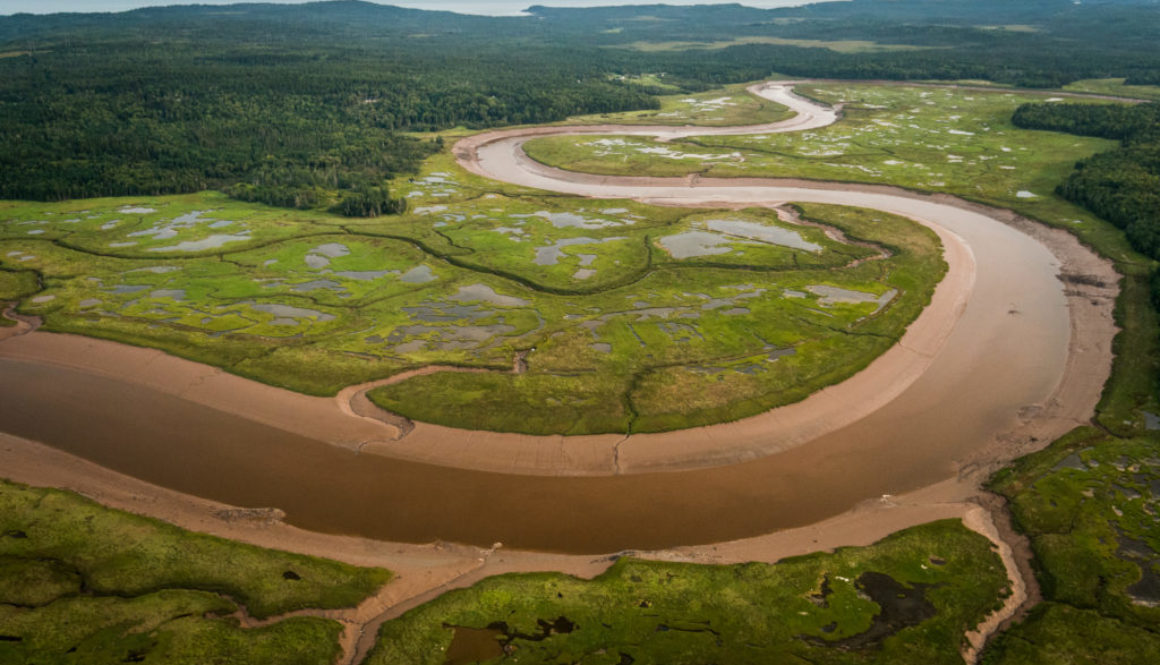
New Brunswick’s Bay of Fundy coastline has a lot to offer: the world’s highest tides, the “flower pots” of Hopewell Rocks, and one of Canada’s marine protected areas (MPAs). Musquash Estuary, lying southwest of Saint John, NB, is the only fully functioning estuary in the Bay of Fundy. The unique properties of the estuary, from highly productive salt marshes to expansive mudflats, provide ample habitat to the migratory and year-round wildlife residents nesting, foraging, and reproducing here. This important ecosystem is well-deserving of protected status to conserve the nature and heritage of the region.
Musquash Estuary was designated as an MPA in 2006 by the federal government, protecting the ecosystem from the impacts of fishing and other industrial developments. This MPA represents an important step toward protecting the coast where the land meets the sea, considering land- and sea-based impacts in the management of the MPA. While this is an accomplishment for the federal government in protecting marine and coastal areas, Musquash Estuary tells a success story of the strength of communities in coming together to protect a highly valued area.
While Canada pursues the target to protect 10% of coastal and marine areas by 2020, Musquash Estuary highlights the value of community engagement and the powerful voice of New Brunswickers in helping Canada to achieve these conservation goals. Through partnership between the Conservation Council of New Brunswick (CCNB) and the Fundy North Fishermen’s Association, the MPA was proposed to Fisheries and Oceans Canada in 1998 with strong community support. Where the intertidal zone is under provincial jurisdiction, this MPA also demonstrates strong collaboration between the Government of New Brunswick and the federal government to create an MPA that spans the intertidal and marine environments. Education, outreach, and stewardship continue to be important activities in the MPA, including local communities and conservation organizations whenever possible to enable the long-term success of MPA management.
Musquash Estuary is open to the public for low impact activities, providing scenic hikes, historic shipwrecks, and launches for canoeing and kayaking. This summer, our friends at the CCNB will host the Fundy Baykeeper’s 20th Annual Musquash Paddle on August 11, providing an opportunity to explore the conservation benefits of MPAs first-hand. This MPA champions public access and community support, showcasing New Brunswick’s coastline and encouraging visitors and locals to connect with the natural wonders of this province.
CPAWS-NB hopes governments at all levels (federal, provincial and indigenous) will work with communities again to expand conservation in the Bay of Fundy through the creation of a network of MPAs. A network, instead of single fragmented MPAs, offers many benefits: protecting a range of biodiversity, safeguarding habitat for mobile species, and maintaining healthy ecosystems across MPA sites. The Musquash Estuary MPA provides an important starting point for creating a network of MPAs in the Bay of Fundy by conserving the place where land-sea meet. Musquash Estuary, together with the designation of new MPAs across habitats of the Bay of Fundy, will allow New Brunswick to become a leader in marine conservation through the establishment of a community-supported MPA network.
Add your voice to the CPAWS-NB campaign to conserve the Bay of Fundy through a network of MPAs by visiting http://www.protectbayoffundy.ca.
Fisheries and Oceans Canada (DFO). (2017). Musquash Estuary: a management plan for the marine protected area and administered intertidal area. Dartmouth, NS. http://waves-vagues.dfo-po.gc.ca/Library/344113.pdf
Jessen, S., Chan, K., Côté, I., Dearden, P., De Santo, E., Fortin, M.J., Guichard, F., Haider, W., Jamieson, G., Kramer, D.L., McCrea-Strub, A., Mulrennan, M., Montevecchi, W.A., Roff, J., Saloman, A., Gardner, J., Honka, L., Menafra, R. & Woodley, A. (2011). Science-based guidelines for MPAs and MPA networks in Canada. Vancouver: Canadian Parks and Wilderness Society. 58 pp.
Julie Reimer is a PhD student at the Memorial University of Newfoundland and a Board Member of CPAWS-NB. Having worked in the whale watching industry in New Brunswick and conducted her Master’s research on conservation planning for the North Atlantic right whale, Julie is an advocate for MPAs in New Brunswick. Julie’s current research attempts to see the “bigger picture” of conservation, reaching beyond protected areas to understand the synergies between conservation actions and ocean industries. To connect with Julie, visit http://juliereimer.wixsite.com/hello.
From Canada’s warmest saltwater beach to the Maritime’s highest peak, the nine provincial parks of New Brunswick offer unique opportunities to connect with nature beyond the typical activities many enjoy at parks, like skiing, golfing, or camping. The provincial parks are designed to protect ecosystems and biodiversity while offering opportunities for outdoor recreation, education, and tourism. Each park is home to diverse wildlife, vibrant foliage, and stunning views, all waiting to be experienced by you!
For your next trip to a provincial park, try one of these activities to enjoy nature and catch a breath of fresh air.
1. Hit the trails
Map by Parks New Brunswick/Parcs Nouveau-Brunswick
Explore the Fundy coastline at New River Beach or reach the summit of Sugarloaf Park’s mountain. Whether you’re visiting the campgrounds or making a day trip, don’t miss out on the wilderness of New Brunswick! Remember to check out Tourism New Brunswick’s information on trails or download the Explore EcoNB mobile app to browse the nature-based attractions in the province.
2. Identify invertebrates
If you’re visiting a coastal park, don’t forget to take a walk along the beach and look for signs of life under the sand. Wetlands in the provincial parks are also teeming with small wildlife. Remember: all plants and animals have an important role to play in the ecosystem and need to be left in the park. Even empty shells could be the perfect new home for a hermit crab!
3. Binoculars and birding
Little Explorer, Photo by Tim & Selena Middleton, Creative Commons License 2.0
If you’re out on a hike or taking a stroll around a park campground, don’t forget to listen and look for all sorts of birds: songbirds, birds of prey, waterfowl, and more. Bring a pair of binoculars to get a closer look and try using the Merlin Bird ID app to identify what you hear and see.
4. Get out on the water
Many of the provincial parks offer opportunities to get out on or into the water. Go for a swim at Parlee Beach, the warmest salt water in Canada. Put in your kayak or canoe for some low-impact boating here or at Mactaquac Provincial Park. If you’re visiting Mount Carleton Provincial Park, bring your rod and reel for some catch-and-release fishing. Remember to have your fishing license ready if you’re out on the water.
5. Go for a ride
Did you know that Sugarloaf Provincial Park offers Atlantic Canada’s only lift-service mountain bike park? République Provincial Park also offers cycling trails, so be sure to bring along your bikes, helmets, and re-usable water bottles for a fun ride.
6. Fresh oxygen exercise
Take advantage of the fresh oxygen made by the trees and plants in the parks and get some exercise in. Take on an early morning trail run, find a quiet space for some outdoor yoga, or create a body-weight circuit with some friends. You’ll feel refreshed and energized after feeling the morning dew, smelling the sweet grass, and hearing the gentle wind in the trees.
7. Chase waterfalls
Third Vault Falls, Photo by Sean McGrath; Creative Commons License 2.0
If you want to get strategic about which trails you visit in the provincial parks, consider chasing some of New Brunswick’s most breath-taking waterfalls. Dry Brook Falls and Williams Falls in Mount Carleton Provincial Park are waiting for you to discover them. See this Tourism New Brunswick blog post for a list of the top ten waterfalls in our province.
8. Create a nature search
As a fun kid-friendly activity, create a nature scavenger hunt! Have your group search for different pieces of nature: a smooth rock, a pine cone, an ant hill. You can incorporate different senses, too: describe a nature smell or list three nature sounds. Remember that all nature needs to stay in the ecosystem, so avoid activities like flower or leaf picking.
9. See nature up close
If you’re out with your family, bring along a magnifying glass or two to explore nature up close. Take a look at the shell of a snail or the hooks of a burdock. The microscopic natural world is an amazing sight to see!
10. Take an island adventure
Hop on the ferries and visit Grand Manan or Campobello Islands this summer, then make your way to the Anchorage Provincial Park or Herring Cove Provincial Park. Hit the trails of The Anchorage and take in the remarkable geology of the island or put in a kayak from Herring Cove for a true Fundy experience. Keep your eyes peeled for the blow of whales; both of these parks offer awe-inspiring wildlife experiences.
CPAWS-NB hopes you’ll take advantage of the provincial parks to get closer with nature with each visit. Remember that the parks are meant for all New Brunswickers and visitors to enjoy, and that we are responsible for taking care of our environment. When you visit, be sure to take all garbage and refuse with you when you leave, keep dogs on a leash and clean up after them, and respect nature by leaving it in the park. The provincial parks offer ample opportunities, some year-round, to explore the wilderness. Start planning your next adventure today!
Visit here for more information on New Brunswick Provincial Parks.
Julie Reimer is a PhD student at the Memorial University of Newfoundland and a Board Member of CPAWS-NB. Having worked in the whale watching industry in New Brunswick and conducted her Master’s research on conservation planning for the North Atlantic right whale, Julie is an advocate for MPAs in New Brunswick. Julie’s current research attempts to see the “bigger picture” of conservation, reaching beyond protected areas to understand the synergies between conservation actions and ocean industries. To connect with Julie, visit http://juliereimer.wixsite.com/hello.
July 17, 2018, Fredericton – The Canadian Parks and Wilderness Society (CPAWS) released its annual Parks Report today, What’s Next: Parks and Protected Areas to 2020 and Beyond. The report recommends how governments in Canada – federal, provincial, territorial and Indigenous – can work together to almost double our current protected areas to achieve our international commitment to protect at least 17% of our landscape by 2020, and to plan for the longer-term work needed to reverse the catastrophic and ongoing decline in nature. Canada has the biggest opportunity in a generation to protect nature – and this report provides a roadmap for action.
All jurisdictions in Canada have committed to work together to achieve the 2020 protected area target. Added to the $1.3 billion investment in conservation in the 2018 federal budget, we have an unprecedented opportunity for Canada to safeguard nature in the spirit of reconciliation between Indigenous governments and Crown governments, and between all peoples in Canada and nature.
“In New Brunswick, our government does not have a target or action plan to add new protected areas, and our province is noticeably behind compared to all other parts of the country,” says Roberta Clowater, CPAWS New Brunswick Executive Director. “With political will and a bold action plan, New Brunswick can step up and help Canada reach our goals. Immediate opportunities are to establish the Restigouche Wilderness Waterway, and protect our remaining old forest habitat, provincially significant wetlands, and natural areas in our drinking water watersheds.”
Diverse voices across the country are now calling for action on protected areas, and momentum is growing. With 2020 right around the corner, people are asking, “can Canada do this?” “Can our country almost double the protection of our lands and freshwaters in 2 years?” The answer is YES. In the report, CPAWS identifies places in each jurisdiction where a considerable amount of collaborative work has already been done on proposed protected areas.
With the 2020 target fast approaching, CPAWS makes the following recommendations — that federal, provincial, and territorial governments:
Demonstrate their commitment to almost double Canada’s protected areas by publicly announcing the areas they intend to protect by 2020 to contribute to meeting the target;
Develop a western science and Indigenous knowledge-based plan by 2020 for completing an effective network of interconnected protected areas that will act as a foundation for conserving nature in the face of climate change;
Make a clear commitment to adhere to recognized standards for the protection of nature, including those developed by the International Union for the Conservation of Nature and the Canadian Council on Ecological Areas;
Ensure conservation funding from federal Budget 2018 is allocated primarily to support the creation of new protected areas by federal, provincial, territorial and Indigenous governments and other partners; and
Support Indigenous governments’ work to create Indigenous protected areas.
The report includes recommendations for specific actions in New Brunswick, including developing relationships and partnering with indigenous communities for the Restigouche Wilderness Waterway, and engaging with local communities to support protection in Restigouche and in ecologically important forests, beaches and rivers on Crown land.
CPAWS is ready to work with federal, provincial, territorial and Indigenous governments on protecting our most iconic landscapes, the wildlife that call them home, and the habitat that supports us all.
For interviews, contact: Roberta Clowater, rclowater@cpaws.org ; phone: 506-452-9902
Roberta Clowater, executive director, being interviewed about the Parks Report on the CBC New Brunswick radio program Shift, July 17, 2018.
Background
Canada was the first industrialized country to sign onto the UN’s Convention on Biological Diversity (CBD), an international agreement signed by over 195 countries worldwide. In 2010, as a party to the CBD, Canada pledged to take certain actions to safeguard biodiversity, including protecting at least 17% of the country’s lands and inland waters by 2020. Protecting nature is one of the best proven solutions to slowing the biodiversity crisis.
For over 55 years, CPAWS has been working with all levels of government, and other partners across the country to protect more of Canada’s public lands. As the only nationwide charity dedicated solely to the protection of our public lands and water, and with chapters in almost every province and territory across Canada, we are uniquely positioned to help governments protect what nature really needs.
Protected areas are important to conserve wildlife and wilderness, as well as provide clean air and water for all Canadians, store carbon, and play a major role in improving our health and well-being. They also make economic sense. Protected areas around the world generate US$600 billion per year in direct spending, while costing less than US$10 billion per year to manage.
CPAWS applauds today’s announcement of $1.3 billion dollars over 5 years to protect Canada’s land, ocean, and wildlife. This unprecedented investment will enable Canada to achieve its commitment to protect at least 17% of our land and freshwater by 2020. To date, Canada has protected 10.6% of our landscape. In New Brunswick, 4.6 % is currently protected.
“Today’s historic federal investment in protecting wildlands and wildlife could be a game-changer for nature conservation across Canada, including in New Brunswick,” says Roberta Clowater, Executive Director of CPAWS New Brunswick Chapter. “Budget 2018 recognizes the scale of the biodiversity crisis we face, the need to move quickly to deliver on our promises, and the need to support efforts by all levels of government, civil society, and other partners to protect our treasured natural heritage.”
For the first time, the federal budget not only allocates funding for federal action on nature conservation, but also includes significant support for provinces, territories, and Indigenous governments’ work to establish more protected areas. This cost-shared model is similar to the approach used to deliver other shared priorities in Canada, such as infrastructure, climate change mitigation, and health care.
Highlights of federal Budget 2018 conservation investments include:
$500 million over five years for a new $1 Billion “Nature Fund” to support conservation partnerships and which will leverage funding from other government and non-governmental sources;
$800 million over five years to support:
New federal protected areas
Increased capacity for national park management
Increased capacity to protect species at risk
Funding to establish a coordinated network of conservation areas working with provincial, territorial and Indigenous partners.
“While there are few details available at this early stage, we are hopeful this is an opportunity for the New Brunswick government to secure much needed funding to support the creation of new protected areas in our province, such as the Restigouche Wilderness, and important coastal habitats,” says Roberta Clowater, Executive Director of CPAWS NB Chapter. “With this additional support we hope to see the provincial government establish an action plan, and start to take action to protect these and other crucial natural areas.”
“We are particularly pleased to see the budget acknowledge the leadership of Indigenous peoples in conservation across Canada, and we hope this funding will help advance their work in New Brunswick, which could also contribute to reconciliation between Indigenous and non-Indigenous peoples,” says Clowater.
“We thank the federal government for listening to the recommendations made by CPAWS and our environmental partners in the Green Budget Coalition,” says Alison Woodley, CPAWS’ National Conservation Director, “and we deeply appreciate the efforts of many thousands of Canadians who wrote to the Finance Minister, and of the 116 parliamentarians who signed an open letter supporting our recommendations. Today’s investment confirms how much Canadians care about this issue and shows that raising our collective voice truly works!”
“Investing in protected areas will conserve Canada’s wildlife, water, and wilderness, provide more protected spaces for healthy outdoor activities, and create jobs in communities across the country by growing sustainable nature and culture-based tourism economies,” says Woodley. “This is an investment in the future of our country, which will deliver huge returns.”
In 2010, Canada and other signatories to the UN Convention on Biological Diversity endorsed a strategic plan to reverse a global biodiversity crisis, including a commitment to protect at least 17% of land and inland waters and 10% of ocean areas by 2020 and to improve the quality of protected area networks. The Biodiversity Convention (known as the CBD) was signed in 1992 alongside the UN Convention on Climate Change, recognizing the need to jointly tackle these two critical environmental challenges. Last year the federal government invested in a Pan-Canadian Climate Plan. This year’s investment will support a parallel pan-Canadian effort to protect biodiversity.
The Federal Government’s Recent Efforts towards Achieving Our Commitment
In March 2017, a unanimous report by the House of Commons Standing Committee on Environment and Sustainable Development made a suite of recommendations for action on protected areas.[1] In February 2017, federal, provincial, and territorial governments launched the “Pathway to Canada Target One” process, working with Indigenous peoples, civil society, and private interests to jointly deliver on Canada’s land and freshwater protection target.[2] CPAWS staff were appointed to a Ministerial “National Advisory Panel” to advise on this work. The Panel’s report is expected to be released soon.
Fisheries and Oceans Canada has been leading federal government efforts towards protecting at least 10% of the ocean by 2020, and has made significant progress over the past two years, including the establishment of the Hecate Strait and Queen Charlotte Sound glass sponge reef MPA in BC, and St Anns Bank MPA in Nova Scotia.
New Brunswick needs to step up and commit to new protected areas by 2020
Fredericton – In its latest annual report on the state of protected areas in Canada, the Canadian Parks and Wilderness Society (CPAWS) is calling upon New Brunswick to step up efforts to protect more land by 2020. CPAWS’ 2017 report “From Laggard to Leader? Canada’s renewed focus on protecting nature could deliver results” calls Canada out for ranking last among G7 countries in the percentage of land and freshwater protected for conservation purposes, and encourages governments to conserve Canada’s natural heritage, starting by delivering on their international commitment. New Brunswick ranks 2nd to last among the Canadian provinces and territories.
With only 10.6% of its landscape currently protected, Canada lags behind the global average of 15%, and also trails other large countries such as China, Brazil, and Australia. In 2010, as part of a worldwide effort to stem the tide of biodiversity loss, Canada committed under the United Nations Convention on Biological Diversity to protecting at least 17%of land and inland waters by 2020 and improving the quality of their protected area systems to more effectively conserve nature.
The report recognizes that Canadian governments are finally starting to take this commitment seriously after years of inaction. In February 2017, federal, provincial and territorial Ministers responsible for parks and protected areas publicly announced their commitment to work together to achieve this target. A new Pathway to 2020 process was initiated, and the Indigenous Circle of Experts and National Advisory Panel appointed to advise Ministers on this work.
“In New Brunswick, there has been no progress on working towards the national protected areas targets,” says Roberta Clowater, Executive Director of CPAWS New Brunswick. “There are steps that can be taken by the province immediately to help Canada reach our goals, including setting a target to increase protected areas, developing an action plan to 2020 and beyond, and protecting the Restigouche Wilderness Waterway.”
“With less than 3 years to fulfill our 2020 commitment, we need to get going now,” adds Hébert-Daly. “In the report we identify places across Canada where a considerable amount of work has already been done on proposed protected areas. By acting now to permanently protect these sites, while also planning for what’s needed to conserve nature in the long term, Canada has a chance to move from laggard to leader.”
Clowater adds, “The New Brunswick government could create a world-class wilderness tourism destination by establishing the Restigouche Wilderness Waterway – a wide protected corridor along the river, on Crown land. Currently, 97% of the New Brunswick portion of the Restigouche watershed is open to development, and industrial development is eating away at the region’s wild forests and rivers year by year. By conserving this area’s special nature, promising ecotourism businesses could reliably promote a quality wilderness destination to nature-seeking tourists around the world.”
Protected areas are important to conserve wildlife and wilderness, as well as provide clean air and water for all Canadians, store carbon, and play a major role in improving our health and well-being. They also make economic sense. Protected areas around the world generate US$600 billion per year in direct spending, while costing less than US$10 billion per year to manage.
For over 50 years, CPAWS has been working with all levels of government, and other partners across the country to protect more of Canada’s public lands. As the only nationwide charity dedicated to the protection of our public lands and water, we are uniquely positioned to help governments protect what nature really needs.
For interviews, contact: Roberta Clowater, rclowater@cpaws.org; 506-452-9902