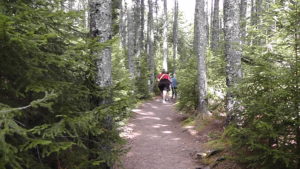

New Brunswick boasts a variety of provincial parks, serving both to conserve nature and to provide recreational opportunities for citizens and tourists.
Although these parks are all on provincially-owned (Crown) land, some are operated by the Department of Tourism and Parks, some controlled by the Department of Natural Resources, and some are operated by private companies or communities. As a result, conditions at these parks vary greatly.
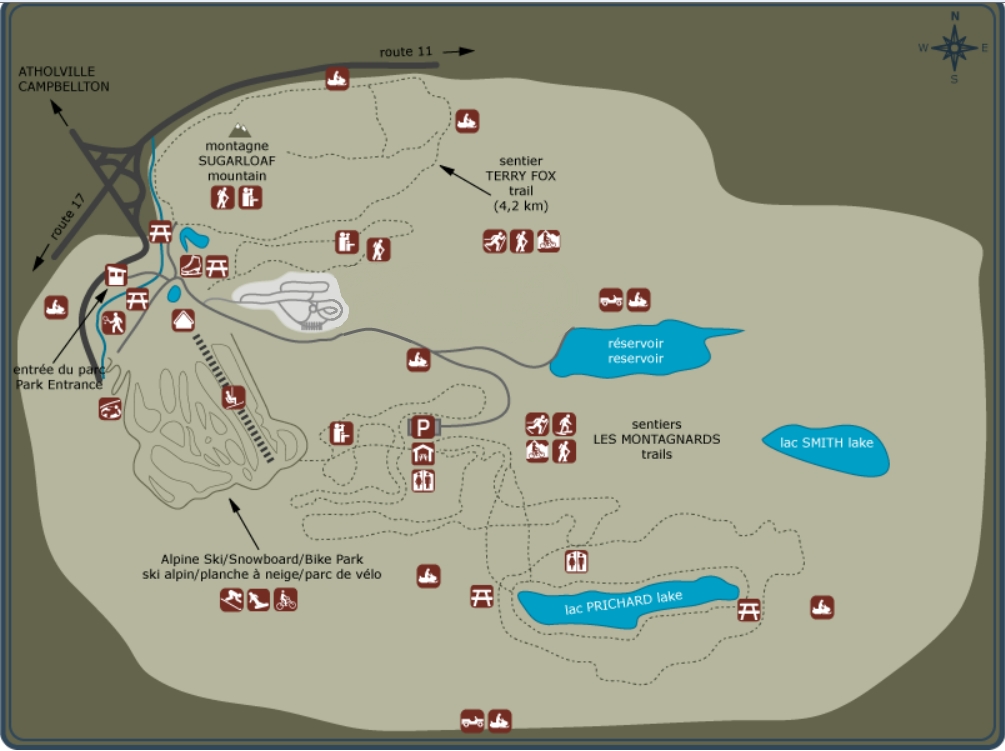
Parks operated by the Department of Tourism and Parks are:
|
|
|
Parks privately managed include:
Other parks in our province controlled by the Department of Natural Resources (some of which have been closed but remain "on the books") are:
|
|
|

Some might think that that New Brunswick’s provincial parks were created for the enjoyment of outdoor activities and the protection of the natural areas within them.
Many would be surprised to learn that the natural areas within provincial parks are not as protected as they hope. According to the Parks Act, provincial parks are for “healthful enjoyment and education” and “shall be maintained for the benefit of future generations”.
The Act does not mention protecting natural features or habitats. Subject to some conditions, many activities which might be considered “un-park-like” are technically permissible, including the construction of quarries and commercial forestry.
Compare this with the rules that govern Canada’s National Parks, which in New Brunswick includes Fundy National Park and Kouchibouguac National Park. The National Parks Act says, “Maintenance or restoration of ecological integrity, through the protection of natural resources and natural processes, shall be the first priority of the Minister when considering all aspects of the management of parks.” (section 8.2)
The national parks system, unlike the provincial parks system, places the interest of the preservation of the environment before economic considerations.

When the environment is not the first priority for New Brunswick provincial parks, development may occur within the parks that places the environment in jeopardy. Two such events have happened recently. The first was in Mactaquac Provincial Park in summer 2008, when trees were cut down for the creation of a tree-top adventure business, including zip lines. Within this relatively natural area (previously used for nature hikes and outdoor education), trees were removed from the edge of a creek. Many logs fell into the water, as well as down to the water’s edge.
The second event was summer 2009 at Mount Carleton Provincial Park. While upgrading existing cabins in the park, forests between the cabins and a lake were removed, again down to the water’s edge.
In both cases, existing ecological processes were endangered by development, and currently there is nothing stopping further events like this occurring.
To ensure that New Brunswick’s provincial parks continue to be “maintained for the benefit of future generations”, CPAWS NB believes that government needs to change existing Park legislation and regulations. We need laws that make ecological integrity a priority for our parks system, and that require conservation management plans for our parks.
The National parks system requires individual management plans for all their parks, which includes “a long-term ecological vision for the park, a set of ecological integrity objectives and indicators and provisions for resource protection and restoration, zoning, visitor use, public awareness and performance evaluation” (Canada National Parks Act, Section 11.1). Developing similar plans would ensure that any development within provincial parks in the future would be consistent with nature conservation.